

The Role of Sensory Evaluation in Delivering Consistent Coffee Quality
BY: MAJA NOVAK
Introduction
Consistency is one of the defining characteristics of exceptional hospitality. While customers may remember an outstanding cup of coffee, what keeps them coming back is the confidence that every visit will deliver the same high standard of quality. Achieving that level of reliability requires more than carefully sourced coffee or advanced equipment. It depends on the ability to evaluate quality objectively, communicate it effectively and continuously refine the systems that support it.
This is where sensory evaluation becomes one of the most valuable tools in specialty coffee. Often associated with professional cupping or green coffee buying, its practical applications extend far beyond quality grading. Within hospitality, sensory evaluation supports operational excellence, staff development and informed decision-making, helping businesses deliver exceptional coffee experiences day after day.
As the specialty coffee industry continues to evolve, so too does our understanding of quality. This article explores the role sensory evaluation plays in building consistent coffee programs, strengthening hospitality operations and supporting long-term business success.
Every hospitality business wants to serve exceptional coffee. Yet sourcing high-quality beans and investing in professional equipment represent only part of the equation. The true challenge lies in delivering the same standard of quality every day, across every shift and every member of the team.
Achieving that level of consistency requires more than following recipes or maintaining equipment. It requires the ability to evaluate coffee objectively, recognize small variations before they become larger problems and communicate quality using a shared professional language. This is where sensory evaluation becomes one of the most valuable tools available to hospitality professionals.
What Is Sensory Evaluation?
When people hear the term sensory evaluation, they often associate it with coffee competitions, professional cuppings or highly trained tasters analyzing subtle flavor differences. While these applications are certainly important, they represent only one aspect of sensory evaluation’s role within the coffee industry.
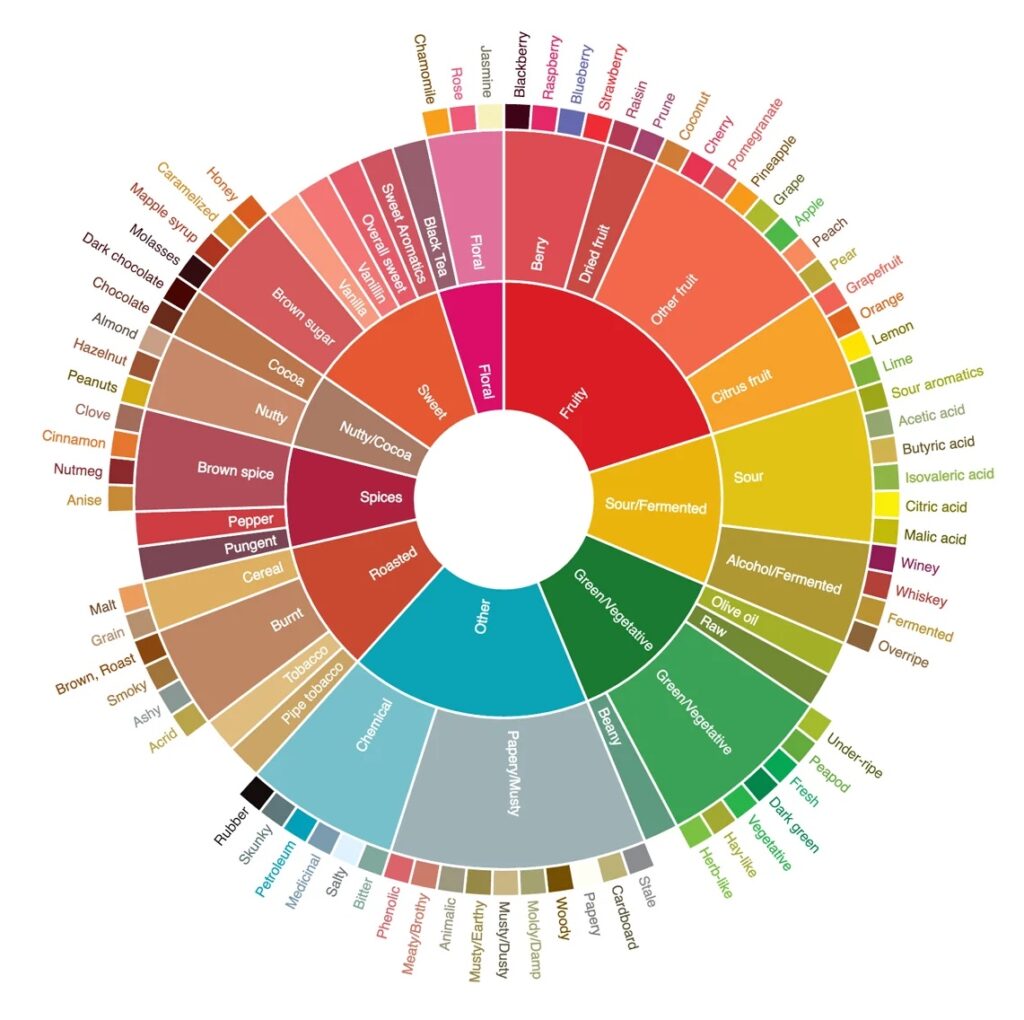
At its core, sensory evaluation is a structured method of assessing coffee through the senses. It provides a systematic framework for observing and describing characteristics such as aroma, flavor, acidity, sweetness, and mouthfeel using defined methodologies rather than personal opinion alone. The objective is not to determine whether someone likes a coffee, but to understand how it tastes and whether it meets the intended quality standard.
This distinction between preference and evaluation is fundamental.
Two experienced coffee professionals may have different personal preferences while still reaching the same conclusion about a coffee’s sensory characteristics. One may naturally favor bright, fruit-forward coffees, while another may prefer more traditional chocolate and nut profiles. Neither preference is inherently more correct than the other. What matters is their ability to recognize and describe the coffee consistently using a shared professional language.
This common vocabulary allows teams to communicate more effectively, identify quality issues with greater confidence and make informed decisions throughout the coffee journey. Rather than relying on subjective impressions such as “this tastes better today” or “something feels different,” sensory evaluation encourages more precise observations that can be linked to measurable variables within the brewing process.
Importantly, sensory evaluation should not be viewed as a skill reserved exclusively for coffee buyers or quality control professionals. Within hospitality, it provides valuable insights for baristas, managers and operational teams alike. Developing sensory awareness enables individuals to recognize subtle changes in coffee quality before they become noticeable to customers, supporting more reliable service and better decision-making.
Like any professional skill, sensory evaluation improves through practice. Regular calibration sessions, guided tastings and structured discussion help build confidence while ensuring that quality standards remain aligned across teams.
Beyond the Cupping Table
Although sensory evaluation often begins with structured tasting sessions, its greatest value is realized when it becomes part of everyday operations.
Within hospitality, quality is shaped by countless small decisions made throughout the day. Changes in grinder settings, water chemistry, extraction time, milk texture or equipment performance can all influence the final cup. Many of these variations develop gradually, making them difficult to detect through technical measurements alone. Sensory evaluation provides an additional layer of quality assurance by allowing teams to recognize these changes before they affect the customer experience.
For example, a slight shift in espresso extraction may not immediately appear significant when reviewing brewing parameters. However, an experienced and calibrated team may recognize increasing bitterness, muted sweetness or reduced clarity long before customers begin commenting on inconsistent quality. Identifying these changes early allows corrective action to be taken before they become recurring operational issues.
The same principle applies across the entire coffee program. A new coffee introduction, seasonal changes in green coffee, adjustments to water treatment systems or routine equipment maintenance all have the potential to influence flavor. Regular sensory evaluation helps ensure that these changes are understood rather than simply accepted, allowing businesses to adapt while maintaining consistency.
Importantly, sensory evaluation should not be treated as a separate activity disconnected from service. It is most effective when integrated into daily routines. Short calibration tastings before service, regular quality checks throughout the week and open discussions about flavor encourage teams to develop greater confidence in recognizing both strengths and potential areas for improvement.
This approach also creates stronger collaboration between operational and technical decision-making. Brewing data provides valuable information about extraction, yield and process stability, while sensory evaluation confirms whether those measurements are translating into the intended customer experience. Used together, they offer a more complete understanding of coffee quality than either approach can provide independently.
Rather than existing solely as a quality control exercise, sensory evaluation becomes an ongoing conversation within the business. It encourages curiosity, strengthens communication and creates a culture where continuous improvement is driven by observation, shared knowledge and a commitment to delivering the best possible experience with every cup.
The Coffee Value Assessment: A New Perspective on Quality
As the specialty coffee industry has evolved, so too has the way quality is understood and evaluated. For many years, numerical scoring systems provided a common framework for assessing coffee, supporting communication between producers, buyers and quality professionals across the supply chain.
While these systems played an important role in establishing industry standards, they also revealed an important limitation. Coffee quality cannot always be captured by a single number.
Recognizing this, the Specialty Coffee Association introduced the Coffee Value Assessment (CVA), a framework that reflects a broader and more comprehensive understanding of coffee quality. Rather than focusing solely on assigning scores, the CVA encourages coffee to be evaluated through multiple perspectives, including objective sensory description, affective or preference-based assessment, and the broader context in which value is created, such as informational and extrinsic attributes.
This shift acknowledges something that hospitality professionals have understood for years: different coffees can deliver value in different ways.
A coffee selected for a specialty café may be chosen for its complexity and distinctive flavor profile, while a hotel breakfast program may prioritize balance, familiarity and broad customer appeal. Neither approach is inherently superior. Success depends on selecting coffees that align with the objectives of the business and the expectations of the customer.
For hospitality operators, the practical significance of the CVA extends beyond coffee sourcing. It reinforces the idea that quality should be viewed as part of a wider system rather than an isolated sensory score. Consistency, customer satisfaction, operational requirements and the intended guest experience all contribute to determining whether a coffee is successful within a particular environment.
The framework also encourages more meaningful conversations about quality within organizations. Rather than asking whether one coffee simply scores higher than another, teams can begin asking more relevant questions. Does this coffee support our concept? Does it perform consistently in service? Does it meet our customers’ expectations? Can it be delivered reliably by every member of the team?
These questions move the discussion beyond technical evaluation alone and place coffee within the broader context of hospitality.
Ultimately, the Coffee Value Assessment reflects an important evolution in the industry. It reminds us that exceptional coffee is not defined solely by its sensory characteristics, but by the value it creates for everyone involved—from producers and hospitality professionals to the customers enjoying the final cup.
Training Teams to Taste
The success of any coffee program ultimately depends on the people responsible for delivering it. Even the highest-quality coffee, carefully developed recipes and well-maintained equipment cannot guarantee consistency if teams lack the confidence to recognize when quality begins to change.
For this reason, sensory evaluation should be viewed as a core component of professional development rather than a specialist skill reserved for experienced coffee professionals.
Training teams to taste is not about encouraging everyone to identify highly complex flavor notes or memorize technical terminology. Instead, it begins with developing observation skills, building confidence and creating a shared understanding of what quality looks and tastes like within the context of the business.
Regular calibration sessions play an important role in this process. By tasting coffees together, discussing sensory observations and comparing perspectives, teams gradually develop a common language for evaluating quality. This shared understanding improves communication across the organization and reduces the subjectivity that can often make quality discussions difficult.
Over time, sensory training also encourages greater confidence in day-to-day decision-making. Baristas become more confident adjusting grinders when flavor changes. Managers develop a clearer understanding of when equipment maintenance or recipe adjustments may be required. Operational teams learn to recognize patterns before they become recurring customer complaints.
Perhaps most importantly, sensory evaluation creates curiosity.
Rather than following recipes mechanically, teams begin asking questions. Why has sweetness changed today? Why does this espresso feel less balanced than yesterday? Could water quality, extraction or grinder calibration be influencing the result? These conversations encourage continuous learning while strengthening both technical understanding and operational confidence.
When sensory evaluation becomes part of an organization’s culture, quality is no longer maintained through supervision alone. It becomes a shared responsibility supported by observation, communication and a collective commitment to continuous improvement.
Sensory Evaluation as a Business Advantage
For many hospitality businesses, sensory evaluation is often viewed primarily as a quality control exercise. While maintaining consistent standards is undoubtedly one of its greatest strengths, its value extends much further. When embedded within everyday operations, sensory evaluation becomes a strategic business tool that supports better decision-making across the organization.
Reliability is one of the clearest examples. Customers are more likely to return when they can rely on the same quality and experience each time they visit. Sensory evaluation helps businesses identify variations before they become visible to customers, protecting both product quality and brand reputation.
It also supports more informed operational decisions. Sensory observations can reveal when brewing recipes require adjustment, when equipment maintenance is affecting performance or when a change in coffee, water or workflow is influencing the final cup. Rather than reacting to customer complaints, businesses can identify opportunities for improvement proactively.
From a commercial perspective, this contributes to greater efficiency. Maintaining consistent quality reduces waste caused by unnecessary recipe adjustments, repeated remakes and avoidable inconsistencies during service. It also strengthens staff confidence by providing clear quality standards that support faster decision-making and more effective communication across teams.
Perhaps most importantly, sensory evaluation reinforces a culture of continuous improvement. Organizations that regularly observe, evaluate and discuss quality are better equipped to adapt as customer expectations, products and operating environments evolve. Rather than treating quality as a fixed target, they develop systems that encourage ongoing learning and refinement.
Ultimately, sensory evaluation is not simply about tasting coffee. It is about understanding quality well enough to deliver it consistently, communicate it effectively and improve it continuously. For hospitality businesses seeking long-term success, that capability represents a meaningful competitive advantage.
Conclusion
Exceptional coffee is rarely the result of a single decision. It is the outcome of thoughtful systems, skilled people and a consistent commitment to quality.
Sensory evaluation plays a central role in bringing these elements together. It provides hospitality professionals with a structured way to understand coffee, identify opportunities for improvement and create a shared language that strengthens communication across teams. More importantly, it transforms quality from something that is hoped for into something that can be measured, maintained and continuously refined.
As the specialty coffee industry continues to evolve, the businesses that succeed will not necessarily be those serving the most complex or highest-scoring coffees. They will be those that consistently deliver experiences aligned with their customers’ expectations while building operational systems capable of supporting quality over the long term.
For hospitality organizations, sensory evaluation is therefore more than a technical discipline. It is a practical framework for developing knowledgeable teams, supporting informed decision-making and delivering the consistency that defines exceptional coffee experiences.
What Defines a Successful Coffee Program?
By: Maja Novak
Coffee has never been more important to hospitality than it is today. Across cafés, hotels, restaurants and workplaces, coffee is no longer viewed simply as another menu item. It has become an integral part of the guest experience, influencing customer satisfaction, shaping brand perception and contributing to long-term commercial performance. For many businesses, coffee has evolved from an operational necessity into a strategic advantage. At the same time, customer expectations continue to rise. Guests expect every cup to reflect the same standard of quality regardless of who prepares it, when they visit or how busy the venue may be. Delivering that level of reliability is one of the greatest challenges facing hospitality businesses, and one of the clearest distinctions between an average coffee program and an exceptional one.
The assumption that exceptional coffee begins and ends with exceptional beans is understandable, but incomplete. High-quality coffee provides an essential foundation, yet even the finest coffee can fall short without the systems required to support it. Equipment, water quality, workflow, staff training and operational standards all influence the final result. When these elements work together, quality becomes repeatable rather than occasional.
This systems-based approach has become increasingly important as the specialty coffee industry has matured. Research led by the Specialty Coffee Association (SCA), together with evolving industry frameworks such as the Coffee Value Assessment (CVA), reflects a broader understanding of coffee quality—one that extends beyond flavour alone to include consistency, transparency, context and value. Rather than evaluating coffee as a single product, these developments encourage businesses to consider the complete experience surrounding it.
Success therefore cannot be measured solely by the quality of the beverage served. It should also be measured by its ability to deliver that quality consistently, support operational efficiency, build knowledgeable and confident teams, and create experiences that customers choose to return to.
While every organization has different objectives, the principles that underpin successful coffee programs remain remarkably consistent.
Quality Begins Long Before the First Cup
One of the most common misconceptions in hospitality is that purchasing exceptional coffee automatically delivers exceptional results. In reality, coffee quality is determined by a chain of interconnected decisions rather than a single ingredient.
The choice of coffee certainly matters, but so does every step that follows. Water composition influences extraction. Equipment requires regular calibration and maintenance. Brewing recipes must be developed, monitored and refined. Staff need both technical competence and sensory understanding to recognize when quality begins to drift. Even the physical design of the workspace can influence consistency during busy service periods.
Each of these elements contributes to the final experience presented to the customer. When one becomes inconsistent, the overall quality of the program is affected regardless of the coffee itself.
For this reason, successful coffee programs are built around systems rather than individual moments of excellence. They rely on clearly defined standards, continuous training and structured quality assurance to ensure that every member of the team is working towards the same objective. Consistency is not achieved through luck or individual talent alone; it is achieved through processes that enable quality to be repeated every day.
Consistency Is the True Measure of Quality
Within the specialty coffee industry, conversations often focus on quality. New origins, innovative processing methods and exceptional flavour profiles frequently dominate attention. While these developments continue to advance the industry, they can sometimes distract from a more fundamental question:
Can that same quality be delivered consistently?
For hospitality businesses, consistency is arguably the most important indicator of long-term coffee quality. Guests rarely compare a coffee to the best cup they have ever experienced; they compare it to the one they enjoyed during their previous visit. The expectation is simple: the experience should be equally satisfying every time.
Achieving this level of repeatability requires far more than technical skill. It depends on the systems that support daily operations.
Clear brewing standards, calibrated equipment, appropriate water quality, documented recipes and structured workflows all contribute to reducing unnecessary variation. Equally important is ensuring that these standards remain practical and repeatable within the realities of a busy service environment. A coffee program should support the business, not slow it down.
This balance between quality and operational efficiency is often overlooked. A recipe that produces exceptional results in a controlled setting may not be suitable for a high-volume hotel breakfast service or a busy city café. Successful programs recognize that consistency is not achieved by pursuing perfection in isolation, but by designing systems that perform reliably under everyday operating conditions.
For organizations operating multiple locations, consistency becomes even more significant. Customers expect the same standard regardless of which venue they visit. While every location has its own team and operational challenges, the underlying coffee program should provide a common framework that enables each site to deliver a familiar experience while maintaining the flexibility to respond to local requirements.
Rather than relying on individual talent alone, successful businesses create environments where quality becomes part of everyday operations. Standard operating procedures, regular equipment maintenance, ongoing calibration and continuous staff development all contribute to making consistency an organizational capability rather than an individual achievement.
Ultimately, consistency is not about removing craftsmanship from coffee. It is about creating systems that allow craftsmanship to be repeated with confidence.
Coffee Program Design: Bringing Every Element Together
Designing a successful coffee program requires more than selecting exceptional coffee. Every decision, from menu development and equipment selection to workflow design and operational standards, influences how consistently quality can be delivered within a hospitality environment. A well-designed coffee program aligns these individual elements into a system that supports both customer expectations and business objectives.
One of the first considerations is defining the role coffee will play within the business. For an independent specialty café, coffee may be the primary reason customers visit, while within a hotel, restaurant or workplace it forms part of a broader hospitality experience. Understanding this purpose helps determine the appropriate menu structure, service model, equipment requirements and staffing approach.
Menu development should also reflect operational realities. While an extensive beverage selection may appear attractive, excessive complexity can slow service, increase training requirements and introduce unnecessary inconsistency. Successful coffee programs balance customer choice with operational efficiency, ensuring that beverages can be prepared consistently during both quiet periods and peak trading hours.
Equipment selection represents another strategic decision. Rather than choosing equipment solely because it is considered the most advanced, businesses should evaluate whether it supports their service volume, workflow, maintenance capabilities and long-term operational objectives. The most effective coffee program is one in which equipment complements the overall business model rather than defining it.
Workflow design is equally important. The physical arrangement of equipment, storage, preparation areas and service points directly influences efficiency, communication and operational performance. Even relatively small improvements to workflow can reduce preparation times, minimise unnecessary movement and create a smoother experience for both employees and customers.
Ultimately, successful coffee programs are not built around individual components but around how those components work together. When menu development, operational planning, equipment selection, workflow design and staff capability are aligned, businesses create systems capable of delivering consistent quality while supporting sustainable commercial performance.
People, Processes and Continuous Improvement
Behind every successful coffee operation is something customers rarely see: a culture built on continuous improvement.
Exceptional coffee is not achieved through one-time training, a carefully written recipe or the installation of new equipment. Those elements are important, but they represent only the starting point. Maintaining quality over weeks, months and years requires an ongoing commitment to learning, evaluation and refinement.
Hospitality is a dynamic environment. Coffee changes with every harvest. Seasonal variations influence flavor profiles and extraction. Water quality can fluctuate, equipment naturally experiences wear over time, and service teams continue to grow and evolve. An operation that remains static will inevitably begin to lose consistency.
For this reason, successful organizations establish processes that encourage regular review rather than reactive problem solving.
Routine equipment maintenance helps preserve brewing performance and extends the lifespan of valuable assets. Scheduled calibration sessions ensure that brewing parameters continue to produce the intended results. Standard operating procedures provide teams with a consistent reference point, while regular performance reviews create opportunities to identify improvements before they affect the customer experience.
Technology and equipment continue to evolve, but they cannot replace knowledgeable professionals who understand both the technical and hospitality aspects of coffee service. Teams perform most confidently when they understand not only how to complete a task, but why it matters.
Training should therefore be viewed as an ongoing process rather than a single event. As new coffees are introduced, menus evolve and operational priorities change, staff development should evolve alongside them. Continuous education helps maintain quality standards while giving employees the confidence to adapt to new situations without compromising quality.
Creating opportunities for open discussion also strengthens an organization’s approach to quality over time. Encouraging teams to share observations, identify operational challenges and contribute ideas for improvement creates a culture of accountability and continuous learning. Small adjustments made consistently often have a greater long-term impact than occasional large-scale changes.
Perhaps most importantly, successful organizations recognize that quality is not owned by one individual. It is embedded within the organization itself. When operational systems, training, sensory evaluation and communication work together, quality becomes resilient. It no longer depends on a single experienced barista or manager but becomes part of the culture shared across the entire team.
Designing Coffee Programs Around Business Objectives
While technical excellence remains fundamental, every successful coffee strategy ultimately serves a broader business purpose.
A common mistake is to evaluate coffee solely through sensory quality without considering how it supports the wider objectives of the organization. In reality, the role of coffee differs significantly depending on the environment in which it is served.
For an independent café, coffee may represent the core product and primary reason customers visit. In a luxury hotel, it contributes to the overall guest experience and reinforces expectations of quality throughout the property. Within a restaurant, coffee completes the dining journey, while in a workplace it can encourage collaboration, wellbeing and employee satisfaction.
Each environment requires a different approach.
The most effective solutions are designed around the specific needs of the organization rather than applying a single approach to every business. Menu development, equipment selection, workflow design, operational standards and staff training should all reflect the objectives, customer expectations and day-to-day realities of the environment in which they operate.
Commercial performance should also be considered alongside quality. A successful program balances customer experience with operational efficiency, ensuring that quality remains commercially sustainable over the long term. Decisions surrounding menu complexity, staffing requirements, service speed and equipment investment should support both hospitality standards and business performance.
This strategic perspective allows coffee to become more than a beverage offering. It becomes a meaningful contributor to brand identity, customer loyalty and long-term business growth.
Ultimately, the strongest coffee businesses are those that integrate technical excellence with thoughtful business planning. They recognize that exceptional coffee is not the final objective, but one part of delivering an outstanding hospitality experience.
Water Quality Optimization: The Foundation of Exceptional Coffee
BY: Maja novak
Introduction
When discussing coffee quality, attention is often directed towards the coffee itself—its origin, variety, processing method or roast profile. While these factors undoubtedly shape the final cup, one of the most influential components is frequently overlooked: water.
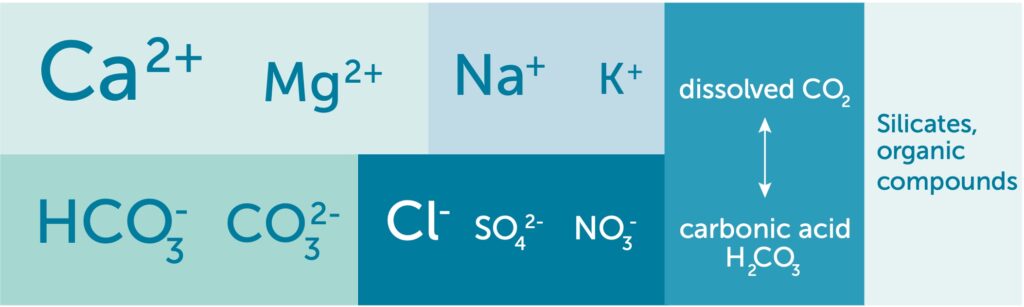
As the primary ingredient in brewed coffee, water plays a fundamental role in extraction, directly influencing flavour, balance, mouthfeel and overall cup quality. Its mineral composition, hardness, alkalinity and pH all affect how soluble compounds are extracted from coffee, making water quality an essential consideration in achieving both consistency and sensory excellence.
Beyond its impact on flavour, water quality also has significant operational implications. It influences equipment performance, maintenance requirements and the long-term reliability of a hospitality operation. Without appropriate water treatment and ongoing monitoring, even the highest-quality coffee, carefully developed recipes and advanced equipment may fail to deliver consistent results.
For hospitality businesses, water quality optimization should therefore not be viewed as an isolated technical adjustment, but as an integral component of a comprehensive coffee program. By understanding and managing water as a strategic resource, organizations can improve beverage quality, support operational efficiency and establish a stronger foundation for long-term consistency.
The Role of Water in Coffee Extraction
Water is far more than a vehicle for brewing coffee. It is the medium through which thousands of soluble compounds are extracted, shaping the flavour, aroma, balance and overall sensory characteristics of the final beverage. The composition of water therefore has a direct influence on extraction and, ultimately, on how coffee is experienced in the cup.
Minerals naturally present in water contribute to the extraction process by interacting with flavour compounds found in coffee. The concentration and balance of these minerals influence extraction efficiency, affecting characteristics such as sweetness, acidity, body and clarity. Water that contains excessive or insufficient mineral content may alter flavour perception, masking desirable characteristics or creating an unbalanced cup.
Equally important is consistency. Even when coffee, equipment, recipes and preparation methods remain unchanged, variations in water composition can lead to noticeable differences in beverage quality. For businesses committed to delivering a consistent customer experience, understanding and managing water quality becomes an essential part of quality assurance rather than an optional technical consideration.
Recognizing the role of water in extraction provides the foundation for informed decision-making throughout coffee operations. By treating water as a controlled variable rather than an uncontrollable environmental factor, businesses are better positioned to achieve reliable and repeatable results while preserving the intended characteristics of the coffee they serve.
There Is No Universal Water Profile
A common misconception is that there is a single water profile capable of producing exceptional results across every coffee and brewing method. In reality, water requirements vary depending on numerous factors, including the characteristics of the coffee, the brewing technique, the equipment being used and the desired sensory outcome.
The mineral composition of water influences how flavour compounds are extracted, meaning that adjustments to water chemistry can alter the balance, sweetness, acidity and body of the final beverage. A water profile that enhances one coffee may produce noticeably different results with another, even when all other brewing variables remain unchanged.
For this reason, water quality optimization should not focus on achieving a universal standard, but rather on developing an approach that supports the specific objectives of each coffee program. Understanding local water conditions, evaluating operational requirements and selecting appropriate treatment methods allow businesses to establish a foundation that aligns with both quality expectations and practical operational needs.
Rather than viewing water treatment as a one-time installation, organizations benefit from treating it as an ongoing component of quality management. Regular monitoring and evaluation help ensure that water continues to support consistent extraction and reliable operational performance as conditions evolve over time.
Water Quality as an Operational Strategy
Effective water quality management extends beyond the initial selection of a filtration or treatment system. It requires an ongoing operational approach that supports both beverage quality and the long-term operational performance.
Water composition may change over time due to seasonal variations, municipal supply adjustments or local infrastructure. As a result, businesses that rely solely on a one-time installation without regular monitoring may gradually experience inconsistencies in extraction, flavor and equipment performance without immediately identifying the underlying cause.
Developing an effective water strategy begins with understanding the characteristics of the local water supply before selecting appropriate treatment solutions and establishing procedures for routine testing, maintenance and ongoing monitoring. These practices help ensure that water quality remains aligned with operational objectives while reducing unnecessary variability throughout the brewing process.
When integrated into broader quality assurance systems, water management becomes a proactive rather than reactive process. Instead of responding to declining beverage quality or equipment issues after they occur, businesses can monitor key variables, identify potential changes early and maintain more consistent operational performance over time.
Water Quality as a Long-Term Investment
Investing in water quality extends beyond improving the flavour of individual beverages. It represents a long-term commitment to operational consistency, equipment reliability and the overall operational performance.
Appropriate water treatment helps minimize mineral scale, reduce the risk of corrosion and extend the operational life of coffee equipment. Preventative water management may also reduce maintenance requirements, minimize operational disruptions and support more predictable service delivery. For businesses operating in fast-paced hospitality environments, these factors can have a meaningful impact on both day-to-day operations and long-term operating costs.
From a quality perspective, effective water management provides a stable foundation upon which every aspect of a coffee operation can perform as intended. Coffee selection, recipe development, staff training and quality assurance processes all rely on consistency to achieve reliable outcomes. When water quality varies significantly, maintaining those standards becomes increasingly challenging.
For this reason, water quality should not be viewed solely as a technical consideration or an equipment requirement. It is an operational investment that supports product quality, protects valuable assets and contributes to the long-term sustainability of the business.
Conclusion
Water quality is one of the most influential yet frequently overlooked factors within a coffee program. Its impact extends beyond extraction and flavour, influencing operational consistency, equipment performance and the ability to maintain quality standards over time.
Rather than being treated as a standalone technical consideration, water quality should be integrated into a broader operational strategy that supports the long-term objectives of the business. Through appropriate assessment, treatment and ongoing management, organisations can establish a more reliable foundation for coffee quality while improving operational efficiency and protecting valuable equipment.
As customer expectations continue to evolve, businesses that recognize water as a strategic operational resource are better positioned to deliver consistent coffee quality, strengthen operational performance and support the long-term success of their coffee programs.
Developing Coffee Programs for Modern Hospitality: A Strategic Framework
BY: MAJA NOVAK
Introduction
Coffee has become an increasingly important component of the modern hospitality experience. Whether within a boutique café, luxury hotel, restaurant, workplace or mixed-use hospitality environment, guests increasingly expect coffee offerings that reflect the same quality, consistency and attention to detail as every other aspect of the business.
Developing a successful coffee program therefore extends beyond selecting coffee beans or investing in equipment. It requires a strategic approach that considers the unique objectives of the business, operational requirements, customer expectations and long-term commercial goals. Every decision—from concept development and workflow design to quality assurance, staff training and operational systems—contributes to the overall performance of the program.
As hospitality continues to evolve, coffee programs have become valuable business assets capable of strengthening brand identity, enhancing the guest experience and supporting commercial success. Organizations that approach coffee strategically are better positioned to create programs that deliver consistent quality while adapting to changing customer expectations and operational demands.
Defining the Role of Coffee Within the Business
Before operational planning begins, it is essential to establish the role that coffee is expected to play within the wider hospitality offering. While coffee is present across a diverse range of hospitality environments, its purpose is not universal. For some businesses, it serves as a defining element of the brand experience, while for others it complements an existing food and beverage offering or provides an additional service for guests, employees or visitors.
The strategic role assigned to coffee influences every subsequent decision throughout the development process. It shapes investment priorities, operational requirements, menu design, service standards, staffing considerations and quality expectations. A specialty café built around coffee craftsmanship will inevitably require a different program than a luxury hotel serving hundreds of guests throughout the day, a restaurant where coffee concludes the dining experience or a workplace designed to support employee wellbeing and productivity.
Recognizing these differences at the outset helps ensure that the coffee program is developed with clear commercial and operational objectives rather than assumptions about what constitutes quality. Success should therefore be measured not only by the standard of the coffee itself, but by how effectively the program fulfills its intended role within the wider business.
Defining Success Beyond the Cup
One of the most common challenges in coffee program development is defining success too narrowly. Beverage quality is undoubtedly fundamental, but it represents only one dimension of a successful program. Within modern hospitality, coffee programs should be evaluated against a broader set of operational and commercial objectives that reflect the role they are intended to fulfill within the business.
A successful coffee program consistently delivers value across multiple areas. It should support the guest experience, operate efficiently within the realities of daily service, maintain reliable quality standards and contribute positively to the commercial performance of the business. These objectives are closely interconnected. Exceptional coffee alone cannot compensate for inefficient workflows, inconsistent service or operational systems that are difficult to sustain over time.
Defining measurable objectives at the outset provides a clear framework for decision-making throughout the development process. Rather than focusing exclusively on individual components, businesses benefit from evaluating the coffee program as an integrated system in which operational performance, customer satisfaction, financial sustainability and quality management support one another to achieve long-term success.
A Strategic Framework for Coffee Program Development
Developing a successful coffee program requires balancing multiple priorities that influence both the guest experience and overall business performance. Rather than treating coffee as an isolated food and beverage offering, effective program development considers how strategic planning, operational execution and continuous quality management interact to support long-term objectives.
While every coffee program should reflect the specific needs of the business, several fundamental components consistently contribute to sustainable performance. These elements should not be viewed as independent stages, but as interconnected pillars that collectively shape the effectiveness of the program throughout its lifecycle.
1. Strategic Planning
Every successful coffee program begins with a clearly defined strategic direction. This includes establishing the purpose of the program, identifying target customers, understanding operational requirements and determining how coffee will contribute to the wider objectives of the business. Strategic planning provides the foundation upon which all subsequent decisions are built, ensuring that investments in equipment, products and operational systems support clearly defined outcomes rather than isolated operational needs.
2. Program Design
Once strategic objectives have been established, the coffee program can be translated into an operational model. This stage encompasses the development of beverage offerings, equipment selection, workflow planning, service standards and operational processes. Program design should balance technical requirements with practical considerations, creating systems that support consistency while remaining appropriate for the operating environment and anticipated service demands.
3. Quality Management
Maintaining consistent quality requires a structured approach that extends beyond beverage preparation. Sensory evaluation, recipe development, water quality management, equipment maintenance and staff education all contribute to the long-term performance of the program. Integrating these elements into ongoing quality assurance processes helps ensure that standards are maintained as the business evolves.
4. Performance Evaluation and Continuous Improvement
Coffee programs should be reviewed regularly to ensure they continue to meet operational and commercial objectives. Performance evaluation may include quality assessments, operational efficiency, customer feedback and broader business outcomes. Continuous review enables businesses to identify opportunities for refinement, respond to changing customer expectations and adapt to evolving market conditions while maintaining consistent standards.
Applying the Framework Across Hospitality Environments
While the strategic principles of coffee program development remain consistent, their implementation varies according to the operational model, customer expectations and commercial objectives of each hospitality business. A successful coffee program is therefore not defined by a standard formula, but by its ability to support the specific purpose it serves within its environment.
In a specialty café, the coffee program often represents the core business offering. Product quality, technical precision, staff expertise and customer engagement become central to the brand experience, with operational decisions designed to showcase coffee as the primary destination.
Within hotels, coffee forms part of a broader guest journey. Programs must balance quality with operational efficiency across multiple service environments, which may include breakfast operations, restaurants, lounges, conference facilities and in-room service. Consistency, scalability and integration with wider hospitality standards become equally important as beverage quality.
Restaurants present a different operational context, where coffee complements the overall dining experience rather than serving as the primary attraction. Here, menu integration, service timing and consistency throughout the guest journey play a significant role in delivering a cohesive hospitality experience.
Corporate workplaces, mixed-use developments and other commercial environments introduce yet another set of priorities. Coffee programs may be designed to support employee wellbeing, encourage collaboration, strengthen workplace culture or enhance visitor experiences. These objectives influence program design just as significantly as technical coffee considerations.
Recognizing these operational differences allows businesses to move beyond standardized solutions and develop coffee programs that reflect both their commercial objectives and the expectations of the people they serve.
Sustaining Performance Through Continuous Evaluation
Developing a coffee program should not be viewed as a finite project completed once operational systems have been implemented. Hospitality businesses operate within an environment of continual change, influenced by evolving customer expectations, advances in technology, workforce development, supply chain dynamics and broader market conditions. As these factors evolve, coffee programs must also adapt to remain effective and commercially relevant.
Regular evaluation enables businesses to determine whether the program continues to achieve its intended objectives while identifying opportunities for refinement and improvement. This process extends beyond monitoring beverage quality alone. It involves assessing operational performance, customer feedback, service consistency, financial outcomes and the effectiveness of quality management systems to ensure that all components of the program continue to function cohesively.
Continuous improvement should therefore be embedded within the long-term management of every coffee program. Rather than responding only when operational challenges arise, businesses benefit from establishing structured review processes that support informed decision-making and ongoing development. This proactive approach strengthens operational resilience while enabling coffee programs to evolve alongside the wider business.
Ultimately, the most successful coffee programs are not those that remain unchanged, but those that continue to develop through regular evaluation, informed adaptation and a sustained commitment to excellence.
Conclusion
Developing a coffee program for modern hospitality requires more than technical expertise or product knowledge. It demands a strategic approach that integrates commercial objectives, operational design, quality management and continuous improvement into a cohesive system that supports both the business and the guest experience.
As hospitality continues to evolve, coffee programs are increasingly expected to deliver value beyond the cup. They contribute to brand perception, operational performance and the overall quality of service, making them an important strategic asset rather than a standalone food and beverage function.
Organizations that approach coffee program development through structured planning, effective implementation and ongoing evaluation are better positioned to create programs that remain resilient, adaptable and capable of delivering long-term value in an increasingly competitive hospitality landscape.
The Evolution of Coffee Quality: Understanding the Coffee Value Assessment (CVA) and Its Implications for Hospitality
BY: MAJA NOVAK
Reference Materials
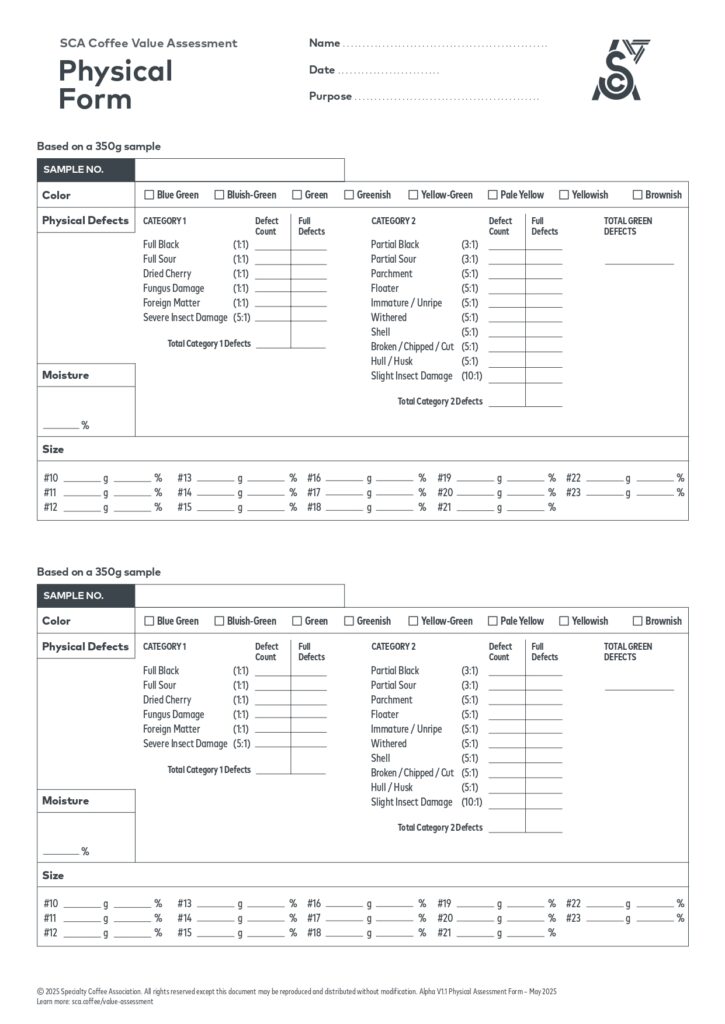
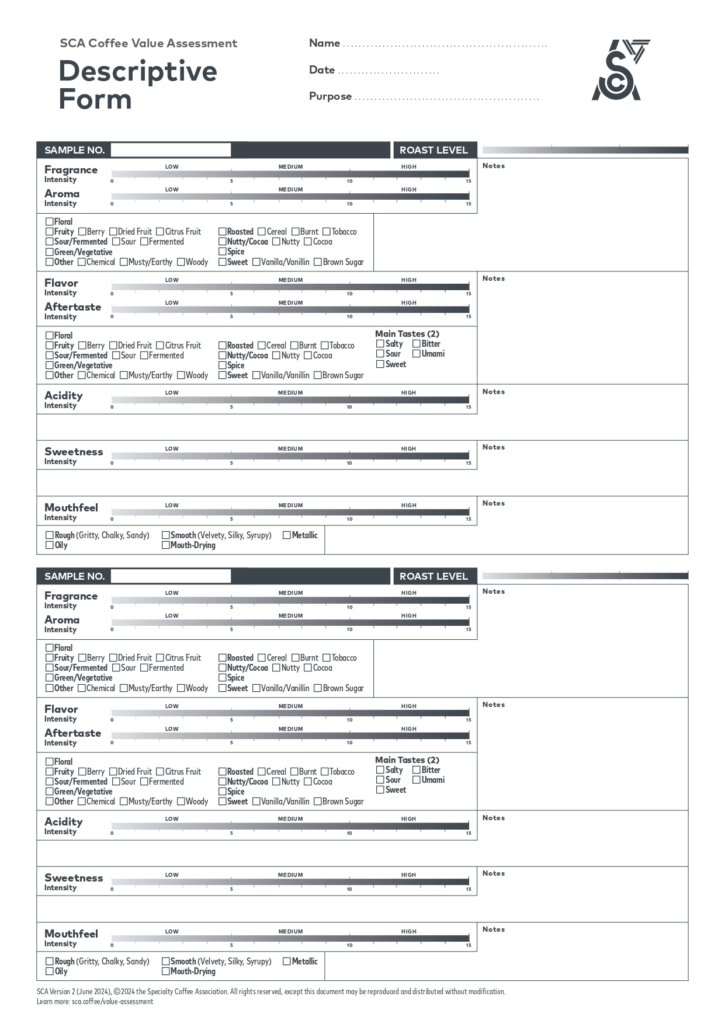
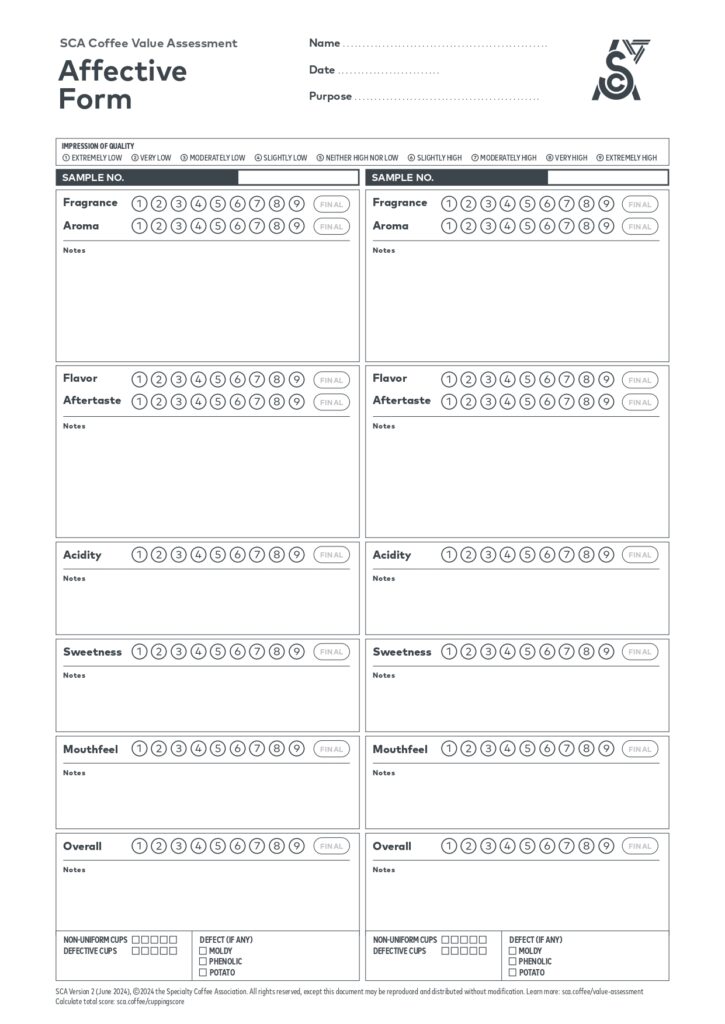
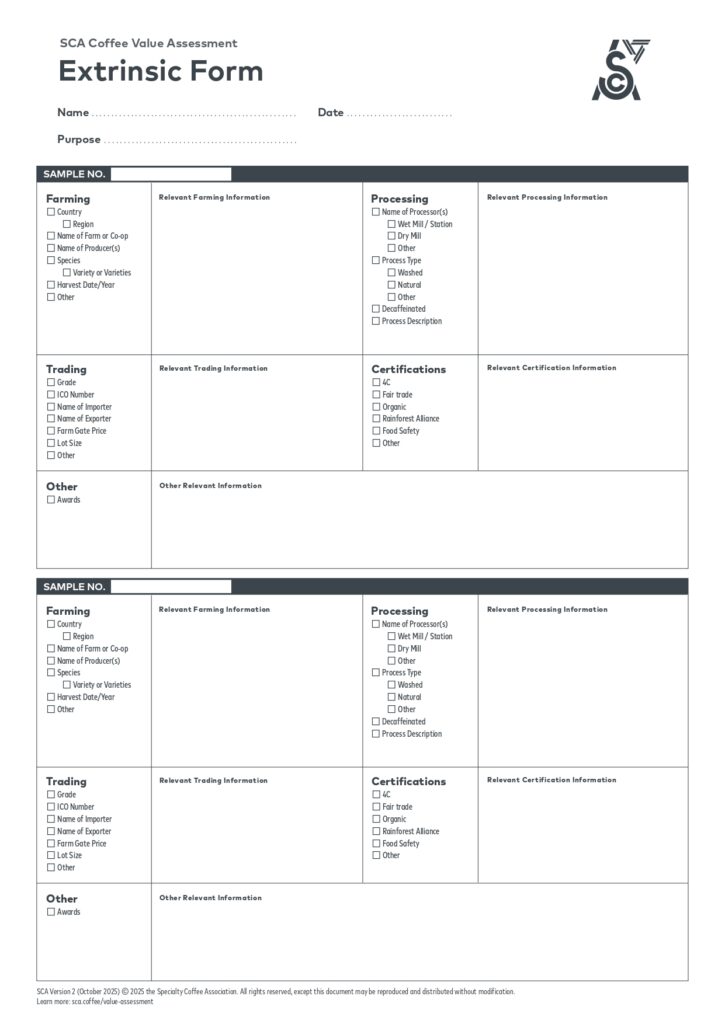
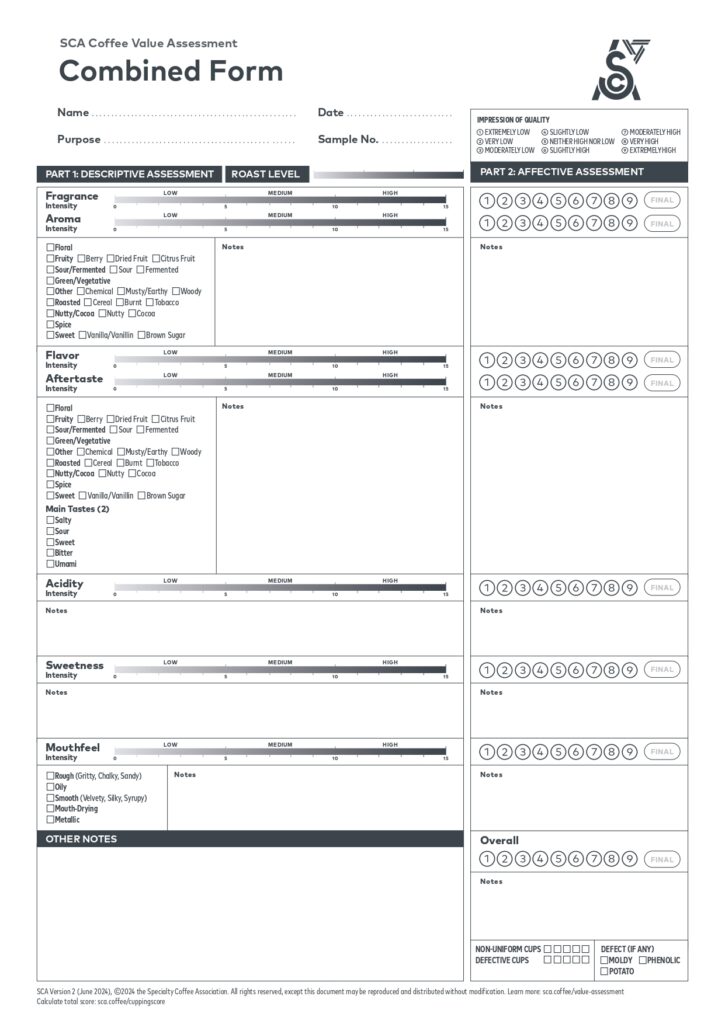
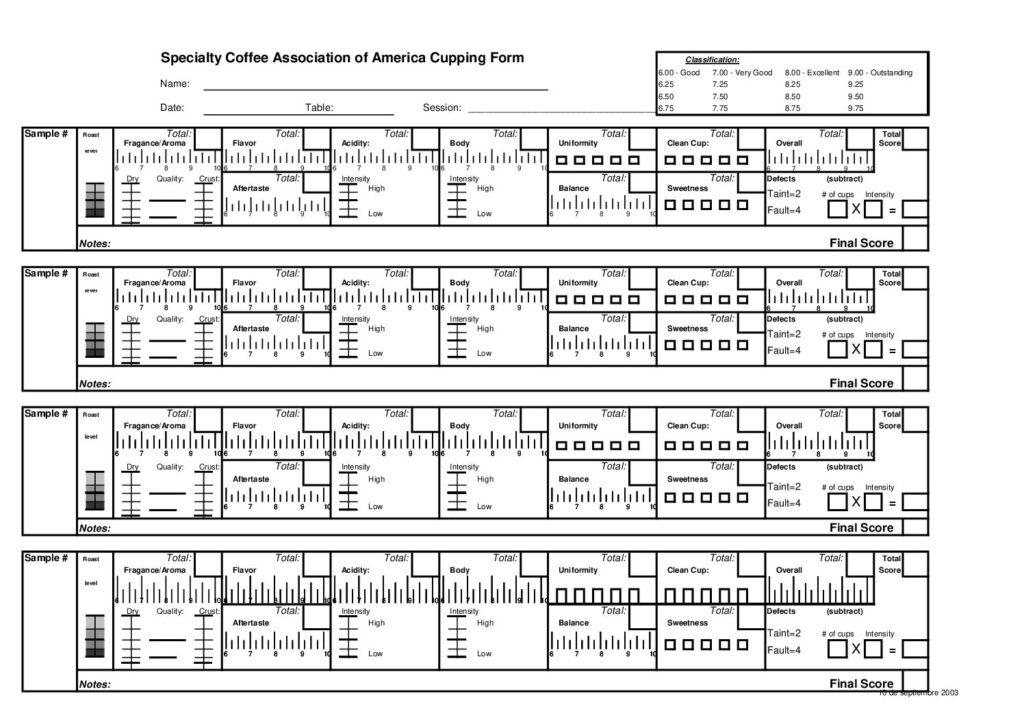
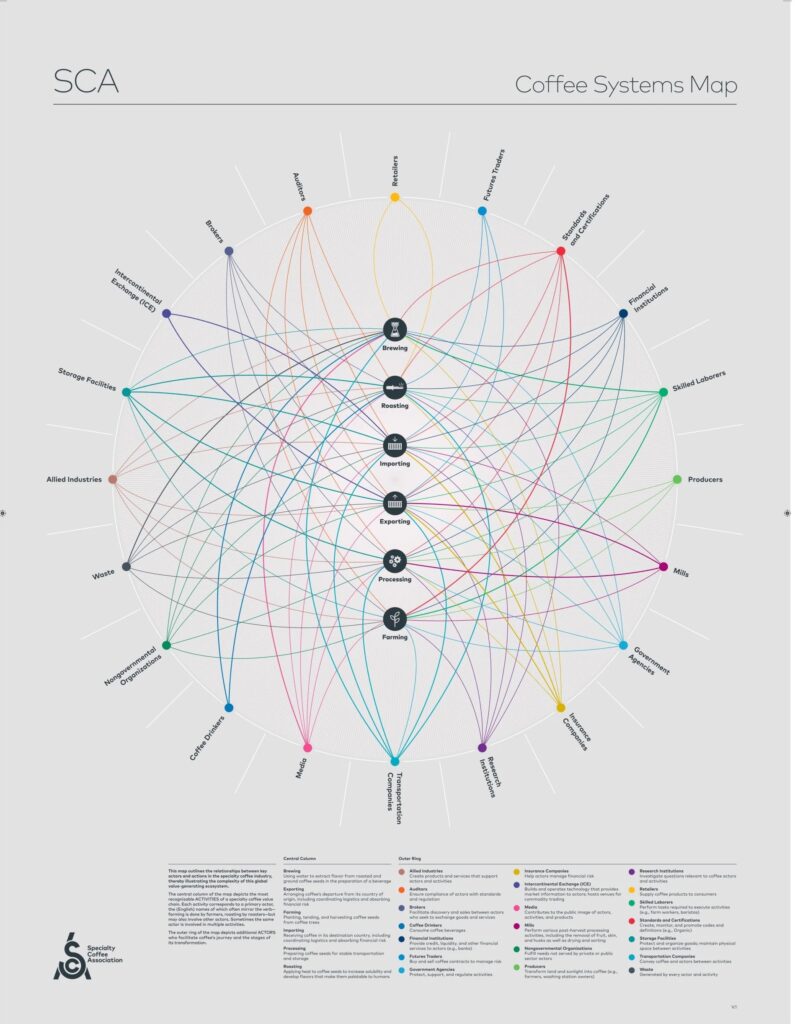
The Coffee Value Assessment forms, SCA Cupping Form, and Coffee Systems Map are provided below as reference documents to accompany the discussion presented in this article. Readers are encouraged to consult the official SCA documentation for complete guidance on their intended application.
Introduction
For decades, the evaluation of coffee quality has relied heavily on structured sensory assessment. Standardized cupping protocols and numerical scoring systems have enabled coffee professionals across producing and consuming countries to communicate quality using a shared methodology, contributing significantly to the development of the specialty coffee industry. These systems have influenced purchasing decisions, quality assurance practices and commercial relationships throughout the coffee value chain.
As the industry has matured, however, the understanding of quality has become increasingly complex. Coffee is no longer evaluated exclusively by producers, exporters and green coffee buyers. Roasters, cafés, hospitality businesses and consumers each assess coffee through different perspectives, shaped by distinct objectives, expectations and definitions of value. A coffee that performs exceptionally within a quality control laboratory may not necessarily create the greatest value in a hospitality environment, where consistency, operational performance and customer satisfaction become equally important considerations.
At the same time, advances in sensory science have highlighted the limitations of representing coffee quality through a single numerical score. Human perception is influenced by biological variation, previous experience, cultural context and individual preference. While structured sensory evaluation remains an essential component of quality assessment, contemporary research increasingly recognizes that quality cannot always be reduced to one dimension or interpreted independently of context.
Recognizing these developments, the Specialty Coffee Association (SCA) introduced the Coffee Value Assessment (CVA), representing a significant evolution in the way coffee quality is understood and communicated. Rather than replacing sensory evaluation, the framework expands its role by recognizing multiple dimensions of value and encouraging a more comprehensive approach to coffee assessment.
For hospitality professionals, this evolution has implications that extend well beyond green coffee purchasing. It invites organizations to reconsider how coffee quality is defined, measured and applied within everyday operations, where technical excellence must be balanced with consistency, efficiency and the expectations of diverse customer groups.
This article explores the scientific and industry developments that led to the Coffee Value Assessment, examines the sensory principles that underpin the framework, and considers its practical implications for hospitality businesses seeking to build more informed and sustainable approaches to coffee quality.
Why Coffee Needed a New Evaluation Framework
For much of the specialty coffee industry’s history, the 100-point cupping system provided a common language for evaluating coffee quality. By introducing a structured methodology and standardized sensory descriptors, it enabled producers, exporters, importers, roasters and buyers to communicate quality with greater consistency than had previously been possible. The framework became instrumental in establishing specialty coffee as a distinct market segment, creating greater transparency in commercial transactions and encouraging continuous improvements in coffee production.
Its influence, however, extended beyond quality control. Numerical scores became widely adopted as indicators of commercial value, shaping purchasing decisions, market positioning and consumer perceptions. Coffees achieving higher scores were often associated with greater quality, while incremental differences in scoring could influence pricing and commercial opportunities throughout the supply chain.
As the specialty coffee sector expanded, the diversity of stakeholders participating in coffee evaluation also increased. Hospitality operators, retailers, consumers, sensory scientists and product developers began assessing coffee from perspectives that differed from those of green coffee buyers or competition judges. These groups frequently shared an interest in quality, but not necessarily in how quality should be defined or measured.
This broader participation highlighted an important challenge: coffee quality is inherently multidimensional.
A numerical score can provide a useful summary of an evaluation, but it cannot fully explain why a coffee performs well, which specific sensory characteristics contribute to its profile, how different evaluators perceive those characteristics, or whether the coffee is appropriate for a particular commercial application. Two coffees may receive similar overall scores while offering fundamentally different sensory experiences, making them suitable for different markets, brewing methods or hospitality environments.
Developments in sensory science further reinforced these observations. Contemporary sensory research distinguishes between analytical evaluation, which seeks to describe measurable product characteristics as objectively as possible, and hedonic evaluation, which examines individual preference and consumer liking. Although these approaches are related, they answer fundamentally different questions. A sensory panel may accurately describe a coffee’s acidity, sweetness and aromatic profile without determining whether consumers will ultimately prefer it. Conversely, consumer preference does not necessarily indicate greater sensory complexity or technical quality.
This distinction has important implications for coffee professionals. A competition judge, green buyer, café owner and hotel guest may all evaluate the same coffee differently, not because one assessment is more correct than another, but because each is guided by different objectives and definitions of value.
Recognizing these complexities, the Specialty Coffee Association initiated the development of the Coffee Value Assessment (CVA). Rather than viewing quality as a single numerical outcome, the framework reflects a broader understanding of how coffee is experienced, described and valued throughout the coffee value chain. In doing so, it represents a shift from asking “How good is this coffee?” towards a more nuanced question:
“What kinds of value does this coffee create, and for whom?”
From Quality Scores to Coffee Value
One of the most significant contributions of the Coffee Value Assessment is that it encourages coffee professionals to separate different types of evaluation rather than combining them into a single numerical outcome. This reflects a broader trend within sensory science, where researchers increasingly recognize that describing a product, judging its technical quality and measuring consumer preference are distinct processes that require different methodologies.
Traditional scoring systems often combined these perspectives into one final score. While practical, this approach could unintentionally obscure important information. A coffee might receive an excellent overall score while appealing only to a relatively small group of consumers, whereas another coffee with a lower score might consistently perform better within a particular market or hospitality setting. The numerical result alone offers limited insight into why these differences exist.
The Coffee Value Assessment addresses this challenge by recognizing that coffee can be evaluated through multiple complementary dimensions of value. Rather than asking evaluators to reduce complex sensory experiences to a single number, the framework encourages a more structured understanding of what is being assessed and why.
Descriptive Assessment: Understanding What the Coffee Is
The first dimension focuses on descriptive assessment, an analytical approach that aims to characterise the sensory properties of coffee as accurately and consistently as possible. Rather than expressing whether a coffee is enjoyable, descriptive assessment seeks to answer a different question:
What sensory characteristics are present?
This distinction is fundamental within sensory science. Analytical sensory methods are designed to minimise personal preference by encouraging trained assessors to observe, describe and communicate sensory attributes using shared terminology and calibrated evaluation procedures. Aroma, flavour, acidity, sweetness, bitterness, body and aftertaste are considered as observable characteristics rather than indicators of individual liking.
Achieving reliable descriptive assessment requires both technical knowledge and sensory calibration. Human perception is naturally variable, influenced by physiology, previous experience, attention and environmental conditions. For this reason, sensory panels undergo regular calibration to improve repeatability and establish a common interpretive framework, allowing observations to become more consistent across different evaluators and over time.
For hospitality businesses, this analytical approach provides a valuable foundation for quality assurance. When teams develop a shared sensory vocabulary, discussions become more precise, operational decisions become more evidence-based and changes in coffee quality can often be identified before they affect the guest experience.
Affective Assessment: Understanding How People Experience Coffee
Describing a coffee accurately does not necessarily explain how people will respond to it. Sensory science therefore distinguishes analytical description from affective assessment, which examines individual perception, enjoyment and preference.
Unlike descriptive analysis, affective evaluation accepts that personal preference is neither fixed nor universal. Consumer responses are shaped by previous experiences, cultural influences, expectations, familiarity and context. A bright, highly acidic coffee that receives enthusiastic evaluations from experienced specialty coffee professionals may feel unfamiliar or even unbalanced to consumers whose preferences have developed around more traditional flavor profiles. Neither response is inherently incorrect; each reflects a different relationship between the individual and the product.
This distinction has important implications for hospitality. Success is rarely determined by technical sensory complexity alone. A coffee program should ultimately satisfy the expectations of the people it is designed to serve. Understanding consumer preference therefore complements analytical sensory evaluation rather than competing with it, allowing businesses to make decisions that balance technical quality with customer satisfaction.
The Coffee Value Assessment reflects this principle by recognizing that describing coffee objectively and understanding how people experience it are equally valuable components of evaluating quality. Together, they provide a richer and more practical understanding of coffee than either perspective could achieve independently.
Value Extends Beyond the Cup
Coffee quality is also influenced by factors that cannot be perceived through sensory evaluation alone. Origin, processing methods, sustainability initiatives, transparency, traceability, production practices and social impact increasingly shape how value is understood throughout the specialty coffee industry.
These attributes do not alter the sensory profile of the beverage directly, yet they influence purchasing decisions, brand positioning and consumer expectations. A hospitality business selecting coffee today may therefore consider not only flavor performance but also supply chain resilience, environmental responsibility, producer relationships and alignment with organizational values.
Recognizing these broader influences represents one of the most important conceptual shifts introduced by the Coffee Value Assessment. Quality is no longer understood solely as a characteristic of the beverage itself, but as part of a wider system in which sensory performance, consumer experience and broader forms of value collectively shape how coffee is evaluated.
Rather than replacing traditional sensory assessment, this multidimensional perspective expands its role. It acknowledges that coffee exists within a complex network of scientific, commercial and human considerations, allowing quality to be understood with greater nuance and relevance across different sectors of the industry.
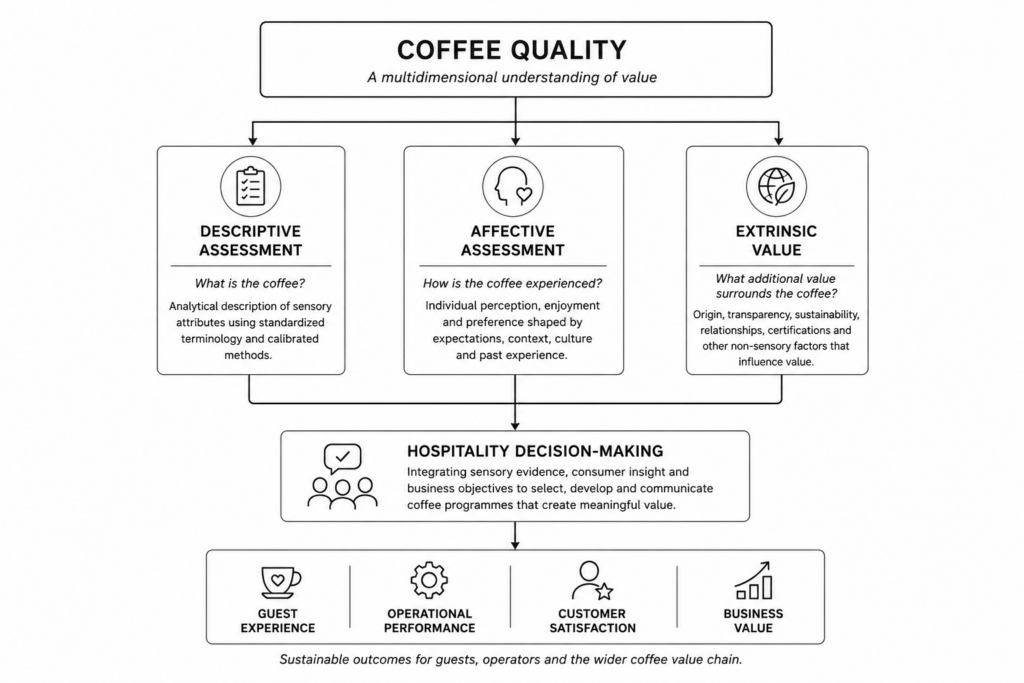
A Multidimensional Perspective on Coffee Quality
Coffee quality is shaped by more than sensory performance alone. Building on the principles reflected in the Coffee Value Assessment (CVA), this framework illustrates how descriptive assessment, affective assessment and extrinsic value collectively contribute to hospitality decision-making. By integrating scientific evaluation with consumer insight and business considerations, organizations can develop coffee programs that create meaningful value for both guests and the wider business.
What the Coffee Value Assessment Means for Hospitality
The introduction of the Coffee Value Assessment has implications that extend well beyond green coffee evaluation. While the framework was developed to support a more comprehensive understanding of coffee quality throughout the value chain, many of its underlying principles align closely with the operational realities of hospitality.
Hospitality has always evaluated coffee differently from commodity markets or professional competitions. The objective is not simply to identify the highest-scoring coffee, but to deliver an experience that consistently meets the expectations of guests while supporting efficient operations and commercial sustainability. In this context, coffee quality cannot be considered independently of the environment in which it is served.
This distinction becomes increasingly important as specialty coffee continues to expand beyond dedicated cafés into hotels, restaurants, workplaces and other hospitality settings. Each environment places different demands on a coffee program, influencing how quality should be interpreted and applied.
Quality Depends on Context
Within specialty coffee, it is often tempting to assume that a higher-scoring coffee is inherently the better choice. While exceptional sensory performance remains an important indicator of quality, hospitality decisions frequently involve additional considerations that extend beyond the cupping table.
A coffee selected for a high-volume hotel breakfast service may prioritize sweetness, balance, consistency and broad consumer acceptance. In contrast, a specialty café may deliberately seek coffees with highly distinctive flavor profiles that appeal to customers looking for unique sensory experiences. Both approaches can represent excellent quality when evaluated against their intended purpose.
The Coffee Value Assessment reinforces this contextual perspective by recognizing that value is not determined solely by intrinsic sensory characteristics. Instead, quality should be considered alongside the objectives of the organization, the expectations of the customer and the environment in which coffee is consumed.
For hospitality professionals, this represents an important shift in thinking. Rather than asking “Which coffee scored highest?”, organizations may benefit from asking “Which coffee best supports the experience we want to create?”
Technical Excellence and Guest Satisfaction Are Not Always Identical
One of the most valuable insights from sensory science is that expert evaluation and consumer preference are related, but not interchangeable.
Trained sensory assessors develop the ability to identify subtle differences in flavor, aroma, acidity, sweetness and mouthfeel through structured evaluation and calibration. Their role is to describe coffee as consistently and accurately as possible using analytical methods designed to minimize subjective bias.
Guests, however, experience coffee differently.
Their perception is influenced by familiarity, expectations, previous experiences, cultural background, mood, service environment and even factors unrelated to the beverage itself, including presentation, atmosphere and interactions with staff. Research across sensory and consumer sciences has consistently demonstrated that these contextual influences play an important role in shaping perceived quality.
This does not diminish the importance of technical sensory evaluation. Rather, it highlights that hospitality professionals must integrate analytical assessment with an understanding of customer experience. The highest-performing coffee under controlled sensory conditions will not necessarily generate the highest levels of customer satisfaction if it fails to align with the expectations of the people drinking it.
Successful coffee programs therefore require both perspectives. Analytical evaluation supports technical consistency and quality assurance, while an understanding of consumer perception helps ensure that these technical standards translate into meaningful hospitality experiences.
A More Strategic Approach to Coffee Program Development
Viewed through the principles reflected in the Coffee Value Assessment, coffee program development becomes less about selecting the “best” coffee and more about designing systems that consistently deliver value.
Coffee selection remains important, but it represents only one component of a broader operational strategy. Brewing protocols, water composition, equipment performance, workflow design, staff education and sensory calibration all influence whether the intended quality is delivered consistently throughout service. These operational factors determine whether the potential identified during evaluation can be realized in everyday hospitality environments.
This systems-based perspective encourages organizations to think beyond individual products and consider how quality is created, maintained and communicated throughout the guest journey. It also supports more informed decision-making by recognizing that successful coffee programs balance scientific understanding, operational practicality and customer expectations rather than relying on any single measure of quality.
For consultants and hospitality operators alike, the Coffee Value Assessment therefore offers more than a revised evaluation framework. It provides a broader way of thinking about coffee quality—one that reflects the complexity of modern hospitality while encouraging decisions that are both evidence-based and contextually appropriate.
Coffee Quality as an Evolving Discipline
The development of the Coffee Value Assessment reflects a broader transformation occurring within specialty coffee. Rather than representing the conclusion of quality evaluation, it illustrates how the industry’s understanding of quality continues to evolve alongside advances in sensory science, consumer research and coffee production.
Historically, coffee quality was often discussed as though it were a fixed characteristic that could be measured objectively through standardized sensory assessment. Contemporary research presents a more nuanced perspective. While analytical sensory evaluation remains fundamental to quality assurance, increasing attention is also being given to consumer perception, contextual influences and the multiple forms of value that coffee creates throughout the supply chain.
This evolution mirrors developments across the wider field of food sensory science. Modern evaluation increasingly combines analytical methods with consumer research, recognising that understanding how products are perceived, experienced and valued provides a more comprehensive picture than technical assessment alone. Within coffee, this integrated approach offers opportunities to better understand not only flavor quality but also the relationship between sensory characteristics, consumer expectations and commercial performance.
For hospitality, this broader perspective encourages organizations to move beyond evaluating coffee solely as a beverage. Coffee programs can instead be understood as dynamic systems in which product quality, operational execution and guest experience continuously influence one another. Sensory evaluation, customer feedback, operational data and ongoing staff development each contribute valuable information that supports evidence-based decision-making and continuous improvement.
Future developments are likely to continue strengthening the relationship between sensory science and practical decision-making. As sensory methodologies become increasingly refined and data collection becomes more sophisticated, hospitality organizations will have greater opportunities to understand how technical quality translates into customer satisfaction and long-term business performance. Rather than replacing professional judgement, these developments are expected to provide additional tools that support more informed, transparent and consistent decision-making.
Ultimately, the significance of the Coffee Value Assessment extends beyond the framework itself. It reflects an industry that increasingly recognizes quality as a multidimensional concept shaped by scientific understanding, human perception and practical application. This broader perspective not only enhances the way coffee is evaluated but also creates new opportunities for hospitality professionals to develop coffee programs that are technically rigorous, commercially sustainable and closely aligned with the experiences they seek to deliver.
Conclusion
The way coffee quality is understood has changed significantly over the past two decades. Advances in sensory science, together with the growing diversity of stakeholders participating in the specialty coffee industry, have demonstrated that quality cannot always be represented by a single numerical score or interpreted independently of context. While structured sensory evaluation remains essential, it is now increasingly complemented by broader considerations of consumer perception, operational performance and value creation.
The Coffee Value Assessment represents an important step in this evolution. By distinguishing between analytical description, affective evaluation and broader forms of value, it provides a more comprehensive framework for understanding how coffee is experienced throughout the value chain. Rather than replacing established sensory methodologies, it expands their application and encourages more informed conversations about quality across different sectors of the industry.
For hospitality professionals, the implications extend well beyond coffee sourcing. The framework reinforces the importance of aligning technical excellence with operational consistency, customer expectations and the specific objectives of each business. In doing so, it encourages a more strategic approach to coffee program development—one that recognizes quality as the product of interconnected systems rather than isolated decisions.
As specialty coffee continues to evolve, organizations that combine scientific understanding with practical application will be better positioned to adapt to changing expectations while maintaining consistently high standards. Ultimately, the future of coffee quality lies not in replacing existing approaches, but in developing more complete and evidence-based ways of understanding the diverse forms of value that coffee creates for producers, hospitality professionals and consumers alike.
Coffee Extraction Science: From Fundamental Principles to Practical Application
BY: MAJA NOVAK
Introduction
Coffee extraction is one of the most extensively discussed subjects in specialty coffee, yet it remains one of the most frequently misunderstood. While variables such as grind size, brew ratio, water temperature and brewing time are routinely adjusted by coffee professionals, the scientific principles governing extraction are often simplified into practical recipes or numerical targets. As a result, brewing decisions are frequently evaluated through isolated metrics—most notably Total Dissolved Solids (TDS) and Extraction Yield (EY)—without fully considering the complex physical and chemical processes that determine how soluble compounds are transferred from roasted coffee into the beverage.
Extraction is fundamentally a process of mass transfer. During brewing, water acts as a solvent that dissolves and transports hundreds of chemical compounds from ground coffee. These compounds differ significantly in their molecular structure, polarity, solubility and extraction kinetics, meaning they are not released uniformly throughout the brewing process. Organic acids, sugars, lipids, volatile aroma compounds, melanoidins and phenolic substances each contribute differently to the sensory profile of coffee and exhibit distinct extraction behaviours under changing brewing conditions.
The challenge for coffee professionals therefore extends beyond achieving a predefined extraction percentage. Two brews displaying identical extraction yield values may present markedly different sensory characteristics due to variations in particle size distribution, water chemistry, flow dynamics, channeling, agitation, filtration, or roasting characteristics. Likewise, beverages with similar Total Dissolved Solids may differ considerably in balance, sweetness, clarity and perceived quality. These observations highlight an important distinction between quantitative brewing measurements and qualitative sensory outcomes.
Over the past decade, advances in brewing science have substantially improved the industry’s understanding of coffee extraction. Research from academic institutions, equipment manufacturers, the Specialty Coffee Association (SCA), the Coffee Science Foundation and independent researchers has expanded the conversation beyond traditional brewing formulas toward a more comprehensive understanding of extraction as an interaction between chemistry, physics, engineering and sensory science. This multidisciplinary perspective has encouraged coffee professionals to evaluate brewing not merely as a technical procedure, but as a controlled scientific process requiring systematic observation, measurement and interpretation.
For hospitality businesses, the implications extend well beyond cup quality alone. Extraction consistency influences operational efficiency, customer satisfaction, product standardisation, staff training and quality assurance across multiple locations. A scientifically informed approach to brewing therefore enables organisations to establish repeatable systems that minimise variability while preserving the sensory characteristics that define specialty coffee.
This article explores the scientific foundations of coffee extraction by examining the physical and chemical mechanisms underlying brewing, the variables influencing extraction efficiency, the strengths and limitations of commonly used measurement techniques, and the relationship between analytical data and sensory perception. Rather than presenting brewing recipes or fixed numerical targets, the discussion aims to provide a broader scientific framework through which extraction can be understood, evaluated and applied within modern specialty coffee and hospitality environments.
The Scientific Basis of Coffee Extraction
Coffee extraction is frequently described as the process of dissolving soluble compounds from roasted coffee into water. While this definition is broadly accurate, it represents only the final outcome of a considerably more complex series of physical and chemical interactions. Brewing is fundamentally a dynamic mass transfer process in which water functions as a solvent, transporting hundreds of compounds from the solid coffee matrix into solution. The rate and extent of this transfer are governed by the interplay of diffusion, dissolution, particle geometry, fluid dynamics and the chemical composition of both the coffee and the brewing water.
Roasted coffee is an exceptionally complex material containing thousands of chemical compounds, many of which contribute directly or indirectly to flavour, aroma and mouthfeel. These compounds differ substantially in their molecular size, polarity, solubility and stability. Consequently, they are not extracted simultaneously nor at identical rates. Low-molecular-weight organic acids and certain volatile compounds generally dissolve more readily during the early stages of brewing, while larger molecules, melanoidins and less soluble compounds require longer contact times or more favourable extraction conditions. This sequential extraction explains why changes in brewing variables can alter not only the concentration of dissolved material but also the sensory balance of the final beverage.
From a scientific perspective, extraction begins when water penetrates the porous structure of ground coffee particles. As roasted coffee is highly porous due to the physical transformations occurring during roasting, water rapidly enters the particle matrix through interconnected capillaries and microscopic voids. Once inside the particle, soluble compounds begin dissolving into the surrounding water before migrating towards the particle surface through concentration-driven diffusion. Fresh brewing water continuously replaces the saturated solution surrounding each particle, maintaining the concentration gradient necessary for continued extraction. This continuous movement of dissolved material from regions of higher concentration within the coffee particle to lower concentration in the surrounding liquid represents one of the fundamental driving forces governing coffee extraction.
However, diffusion alone does not fully explain brewing behaviour. Mechanical processes occurring during extraction—including water flow, turbulence, agitation and pressure—continually influence the movement of dissolved compounds throughout the brewing system. These hydrodynamic conditions determine how efficiently fresh solvent reaches coffee particles and how effectively dissolved material is transported away from their surfaces. Even subtle changes in flow distribution or turbulence can alter local extraction conditions, contributing to variations in both extraction efficiency and sensory quality.
Importantly, extraction should not be viewed simply as a process of removing as much soluble material as possible. Specialty coffee seeks selective extraction rather than maximum extraction. The objective is to dissolve desirable compounds in proportions that create balance, sweetness, clarity and complexity while minimising the extraction of compounds associated with bitterness, astringency or harshness. Consequently, brewing represents an optimisation problem rather than a maximisation problem, requiring coffee professionals to balance multiple interacting variables rather than pursuing a single numerical target.
This distinction highlights one of the most common misconceptions within coffee preparation. Extraction Yield and Total Dissolved Solids provide valuable analytical measurements of brewing performance, but they do not directly measure beverage quality. They quantify how much material has entered solution, not whether the resulting composition produces a desirable sensory experience. Two coffees exhibiting nearly identical extraction measurements may differ substantially in flavour due to differences in roast development, particle size distribution, water composition, extraction uniformity or the relative proportions of individual chemical compounds extracted during brewing.
Understanding coffee extraction therefore requires integrating principles from chemistry, physics, engineering and sensory science. Only by considering these disciplines collectively can coffee professionals fully appreciate why brewing variables influence extraction, why measurement tools have limitations, and why sensory evaluation remains essential in assessing coffee quality.
The Chemistry of Coffee Extraction
Although coffee is often discussed as a single beverage, it is in reality an exceptionally complex chemical system. More than one thousand volatile compounds have been identified in roasted coffee, alongside hundreds of non-volatile substances that collectively determine flavour, aroma, body and aftertaste. These compounds originate from the coffee seed itself, while others are formed during roasting through reactions such as the Maillard reaction, caramelisation and thermal degradation. Each compound possesses unique chemical properties that influence how readily it dissolves during brewing and how it contributes to the sensory profile of the finished cup.
The primary objective of extraction is therefore not simply to dissolve soluble material, but to achieve an appropriate balance between the diverse groups of compounds that define coffee quality. Water acts as a selective solvent rather than a universal one. Different molecules exhibit varying degrees of water solubility depending on their chemical structure, polarity, molecular weight and interaction with the coffee matrix. As a result, brewing represents a selective extraction process in which compounds are released at different rates throughout extraction.
Among the earliest compounds to enter solution are many organic acids and low-molecular-weight substances that contribute brightness, perceived acidity and aromatic complexity. Organic acids, including citric, malic and phosphoric acids, generally exhibit relatively high water solubility and therefore become available during the initial stages of brewing. These compounds play an important role in defining freshness and vibrancy, although their sensory contribution depends on concentration, coffee origin, roast development and the presence of other flavour-active molecules.
As extraction progresses, increasingly larger and more structurally complex compounds begin entering solution. Carbohydrate degradation products, soluble polysaccharides and melanoidins formed during roasting contribute sweetness, viscosity and body. Melanoidins, in particular, are high-molecular-weight compounds produced through Maillard reactions that influence colour, mouthfeel and perceived richness while also contributing antioxidant properties. Their extraction generally requires more sustained contact between water and coffee particles than many lower-molecular-weight compounds.
Other compounds, including caffeine, chlorogenic acid derivatives and various phenolic substances, continue dissolving throughout brewing but contribute differently to flavour depending on their concentration and interactions with other extracted components. While caffeine is commonly associated with bitterness, research demonstrates that bitterness in coffee results from a complex interaction among multiple compounds rather than caffeine alone. Likewise, chlorogenic acids undergo extensive transformation during roasting, producing degradation products that contribute to bitterness, astringency and roast character depending on roasting conditions and extraction behaviour.
Volatile aromatic compounds present an additional layer of complexity. These molecules are responsible for much of coffee’s characteristic aroma, yet many are highly susceptible to evaporation and chemical degradation. Brewing therefore represents a balance between extracting aromatic compounds efficiently while preserving them long enough to contribute meaningfully to the sensory experience. Temperature, turbulence, brewing method and serving conditions all influence the retention and perception of volatile compounds.
Importantly, these compound groups are not extracted independently. Instead, they interact continuously throughout brewing, influencing both analytical measurements and sensory perception. A beverage exhibiting a desirable extraction yield may nevertheless display excessive bitterness if certain phenolic compounds are disproportionately extracted, while another coffee with a comparatively lower extraction yield may present exceptional balance because desirable compounds are extracted more uniformly. Consequently, the chemical composition of the beverage—not merely the quantity of dissolved material—ultimately determines coffee quality.
This selective nature of extraction explains why brewing cannot be reduced to a single numerical target. Extraction yield and Total Dissolved Solids quantify the overall amount of dissolved material present within the beverage, but they do not distinguish between the specific compounds that have entered solution or the proportions in which they exist. Two coffees displaying identical analytical measurements may therefore possess markedly different chemical compositions and produce fundamentally different sensory experiences.
Understanding these chemical processes provides an essential foundation for interpreting brewing variables. Grind size, water chemistry, temperature, turbulence and contact time do not simply influence how much coffee is extracted; they determine which compounds are extracted, when they are extracted and how they interact to create the final sensory profile. Appreciating this distinction is fundamental to applying brewing science within specialty coffee and hospitality settings.
The Physics of Coffee Extraction
While the chemistry of coffee extraction determines which compounds contribute to flavour, the physical mechanisms governing their movement ultimately determine how efficiently those compounds enter the final beverage. Brewing is not a static chemical reaction but a dynamic transport process in which water continuously interacts with ground coffee under changing physical conditions. Principles of mass transfer, fluid dynamics and particle mechanics therefore play a central role in determining extraction efficiency, uniformity and repeatability across different brewing methods.
At its core, coffee extraction is driven by concentration gradients. Once water penetrates a coffee particle and dissolves soluble compounds, the concentration of dissolved material within the particle becomes greater than that of the surrounding brewing water. According to the principles of diffusion, molecules naturally migrate from regions of higher concentration to regions of lower concentration until equilibrium is approached. This concentration-driven movement provides one of the primary mechanisms by which dissolved compounds leave the coffee particle and enter the brewing liquid.
However, diffusion alone would produce an impractically slow brewing process. The continuous movement of water throughout the coffee bed continually replaces liquid that has become enriched with dissolved compounds, maintaining the concentration gradient required for ongoing extraction. This process, commonly described as convective mass transfer, substantially accelerates extraction by transporting dissolved material away from particle surfaces while simultaneously delivering fresh solvent capable of dissolving additional compounds. The interaction between molecular diffusion and convective flow therefore governs the overall rate of extraction.
The physical structure of roasted coffee further influences these transport processes. Roasting transforms the coffee seed into a porous material containing an interconnected network of microscopic voids and fractures formed through thermal expansion and gas release. These structural changes increase the accessibility of soluble compounds by allowing water to penetrate deep within the particle matrix. Nevertheless, the internal pathways through which water and dissolved compounds travel remain highly heterogeneous, meaning extraction rarely occurs uniformly throughout an individual coffee particle.
Particle size distribution represents another critical determinant of extraction behaviour. Grinding produces a heterogeneous population of particles ranging from relatively large fragments to extremely fine particles commonly referred to as fines. Because smaller particles possess a substantially greater surface-area-to-volume ratio, water can access a larger proportion of their soluble material within a shorter period of time. Consequently, fines typically extract more rapidly than larger particles, while coarse fragments require longer contact times to achieve comparable levels of extraction. A broad particle size distribution therefore increases the likelihood that some particles become over-extracted while others remain under-extracted, reducing overall extraction uniformity despite acceptable average brewing measurements.
Flow dynamics within the coffee bed introduce an additional layer of complexity. Water naturally follows pathways offering the least hydraulic resistance, meaning even minor variations in bed density, particle arrangement or preparation technique can alter local flow patterns. Under certain conditions, preferential flow pathways may develop, allowing portions of the brewing water to bypass significant areas of the coffee bed. This phenomenon, commonly described as channeling, reduces extraction uniformity by exposing some regions to excessive water flow while leaving others insufficiently extracted. Although average extraction yield may remain within conventional target ranges, local inconsistencies often manifest as reduced sweetness, diminished clarity and increased bitterness or astringency.
Turbulence and agitation likewise influence extraction by modifying the thickness of the boundary layer surrounding individual coffee particles. This microscopic layer of relatively stagnant liquid acts as a barrier through which dissolved compounds must diffuse before entering the bulk brewing solution. Increased turbulence reduces the thickness of this boundary layer, facilitating more efficient mass transfer and accelerating extraction. Conversely, limited agitation may slow extraction by allowing the boundary layer to remain comparatively stable, particularly during immersion brewing methods.
These physical principles demonstrate that coffee extraction cannot be understood solely through brewing recipes or fixed numerical parameters. Identical brewing temperatures, brew ratios and contact times may produce substantially different outcomes if particle size distribution, flow behaviour or bed permeability vary between brews. Consequently, repeatable coffee preparation depends not only on controlling brewing variables individually but also on understanding the physical interactions occurring throughout the extraction process.
Recognizing extraction as a problem of transport phenomena rather than a simple brewing procedure provides valuable insight into why consistency remains one of the greatest challenges within specialty coffee. Every adjustment made during grinding, dosing, distribution, pouring or machine calibration influences the movement of water through the coffee bed and therefore alters the selective extraction of flavour compounds. Appreciating these physical mechanisms allows coffee professionals to move beyond empirical trial and error towards a more systematic, evidence-based approach to brewing optimisation.
Measuring Coffee Extraction: Understanding TDS, Extraction Yield and Their Limitations
The ability to quantify brewing performance represents one of the defining characteristics of modern specialty coffee. Analytical tools such as refractometers have enabled coffee professionals to move beyond subjective observation by measuring dissolved solids within brewed coffee and estimating extraction efficiency with a degree of precision that was previously unavailable. These measurements have contributed significantly to standardization, quality control and brewing consistency across cafés, roasting facilities and research environments. Nevertheless, while quantitative measurements provide valuable information about brewing performance, they should not be interpreted as direct indicators of beverage quality.
The most widely used analytical measurement in coffee brewing is Total Dissolved Solids (TDS), which represents the concentration of dissolved material present within the finished beverage. Expressed as a percentage, TDS indicates how much soluble material has been extracted relative to the total mass of the beverage. Higher TDS values generally correspond to beverages with greater strength and body, while lower values indicate lighter, more dilute brews. Importantly, however, TDS measures concentration rather than composition. It reveals how much material is dissolved in the beverage but provides no information regarding which specific compounds have been extracted or how those compounds contribute to flavour.
Extraction Yield (EY) extends this analysis by estimating the proportion of soluble material removed from the ground coffee during brewing. By combining measurements of beverage mass, beverage strength and the original coffee dose, Extraction Yield provides an estimate of the percentage of soluble coffee compounds transferred into the final cup. Within specialty coffee, EY has long served as an important reference point for evaluating brewing performance and has informed industry resources such as the Brewing Control Chart, which has helped generations of coffee professionals understand the relationship between brew strength and extraction.
Despite their widespread adoption, these analytical measurements possess inherent limitations that must be recognised when interpreting brewing performance. Both TDS and Extraction Yield quantify the overall amount of dissolved material entering solution, yet neither measurement distinguishes between the diverse chemical compounds responsible for coffee’s sensory characteristics. A refractometer cannot determine whether dissolved solids consist predominantly of desirable sugars, organic acids and aromatic compounds or relatively greater proportions of bitter phenolic substances and roasting-derived degradation products. Consequently, identical TDS or EY values may correspond to beverages exhibiting markedly different flavour profiles, balance and overall sensory quality.
Extraction should therefore be understood not only in terms of quantity but also in terms of selectivity. Brewing aims to dissolve desirable flavour-active compounds in appropriate proportions rather than simply maximising the total amount of soluble material extracted. Two coffees may both achieve an Extraction Yield of approximately twenty percent while differing substantially in sweetness, acidity, clarity and bitterness due to differences in roast development, coffee variety, particle size distribution, water chemistry or extraction uniformity. Analytical measurements alone cannot account for these variables because they describe the extent of extraction rather than the chemical composition of the extracted material.
Recent developments within specialty coffee have further reinforced the importance of interpreting brewing measurements within a broader framework. Contemporary research increasingly recognises that coffee quality emerges from the interaction between analytical data and sensory evaluation rather than either approach in isolation. Quantitative measurements provide objective information regarding brewing consistency and process control, while sensory assessment remains essential for understanding how extraction influences perceived flavour, aroma, mouthfeel and overall beverage quality. Neither approach replaces the other; instead, they provide complementary perspectives that together enable a more comprehensive evaluation of coffee.
For hospitality businesses, this distinction carries important practical implications. Brewing systems designed solely to achieve predefined analytical targets may overlook meaningful differences in customer perception, while reliance on sensory evaluation alone may reduce repeatability across multiple locations or staff members. The most effective quality assurance programmes therefore integrate analytical measurements with calibrated sensory evaluation, recognising that numerical data support—but do not replace—professional judgement.
Understanding the strengths and limitations of TDS and Extraction Yield also encourages a more critical interpretation of brewing recommendations. Widely cited numerical ranges provide valuable reference points for process optimisation, yet they should not be regarded as universal definitions of coffee quality. Instead, they function as analytical tools that assist decision-making within a broader evidence-based framework, where sensory performance, brewing objectives and operational consistency collectively determine the success of the final beverage.
Variables Influencing Coffee Extraction
Coffee extraction is governed by the interaction of multiple variables rather than any single brewing parameter. While grind size, water temperature, brew ratio and contact time are often discussed individually, they function as components of an interconnected system in which changes to one variable inevitably influence the behaviour of others. Understanding these relationships is fundamental to achieving consistent extraction and interpreting brewing outcomes within a scientific framework.
Among these variables, particle size distribution exerts one of the most significant influences on extraction. Grinding determines both the available surface area for dissolution and the distance over which soluble compounds must diffuse before entering the brewing water. Finer particles generally facilitate more rapid extraction because their increased surface-area-to-volume ratio provides greater access to soluble material. Conversely, coarser particles require longer contact times for comparable levels of extraction. However, coffee grinders produce a distribution of particle sizes rather than uniformly identical particles. The simultaneous presence of coarse fragments and fine particles introduces variation in extraction rates, increasing the likelihood of localised over-extraction and under-extraction within the same brew. Consequently, particle size distribution—and not merely average grind size—plays a critical role in extraction uniformity.
Water temperature directly influences the kinetics of extraction by affecting both molecular diffusion and the solubility of coffee compounds. As temperature increases, molecular movement accelerates, enhancing the rate at which soluble compounds dissolve and diffuse from coffee particles into the surrounding water. Nevertheless, higher temperatures do not selectively extract desirable compounds alone. They increase the extraction rate across a broad range of chemical constituents, including compounds associated with bitterness and astringency. Temperature should therefore be regarded as a variable that modifies extraction dynamics rather than simply increasing or decreasing extraction efficiency.
The composition of brewing water represents another fundamental determinant of extraction performance. Water is not an inert solvent but a chemically active medium whose mineral composition influences both extraction behaviour and flavour perception. Divalent cations, particularly calcium and magnesium, interact differently with flavour-active compounds and contribute to variations in extraction efficiency, while bicarbonate alkalinity influences buffering capacity and the perception of acidity within the final beverage. Excessively soft or highly mineralised water may therefore alter both analytical measurements and sensory outcomes, reinforcing the importance of appropriate water composition within specialty coffee brewing.
Brew ratio, defined as the relationship between coffee dose and beverage mass, influences extraction by altering the concentration gradient driving mass transfer. Higher brewing ratios generally produce stronger beverages but may reduce extraction efficiency if insufficient water is available to dissolve soluble material. Conversely, larger volumes of water increase solvent availability but may alter beverage strength and sensory balance. Brew ratio should therefore be interpreted as a variable influencing both extraction dynamics and beverage composition rather than strength alone.
Contact time determines the duration over which water remains in contact with ground coffee and therefore influences the extent to which soluble compounds can be transferred into solution. Because different groups of compounds exhibit different extraction kinetics, changes in contact time affect not only the total quantity of dissolved material but also the relative proportions of compounds contributing to flavour. Short extraction times may limit the dissolution of larger, less soluble compounds, while prolonged extraction increases the opportunity for less desirable compounds to enter solution. The relationship between contact time and coffee quality is therefore governed by selectivity rather than duration alone.
Flow behaviour throughout the brewing process likewise contributes substantially to extraction uniformity. In percolation brewing methods such as pour-over and espresso, water movement through the coffee bed is influenced by bed preparation, permeability, resistance and hydraulic pressure. Uneven flow patterns may generate regions receiving disproportionately greater or lesser water exposure, producing channeling and reducing extraction consistency. Immersion methods, while less susceptible to channeling, remain influenced by agitation and fluid movement, which affect mass transfer at the particle surface. Regardless of brewing method, controlling water distribution is essential for achieving repeatable extraction.
Importantly, these variables do not operate independently. A finer grind may require adjustments in brew time, water temperature or flow rate to maintain extraction balance. Likewise, modifications to water composition may alter the effectiveness of a previously established brewing recipe. Brewing optimisation should therefore be understood as a process of balancing interacting variables rather than pursuing ideal values for individual parameters.
This systems-based perspective reflects the broader direction of contemporary coffee science. Advances in analytical measurement, brewing research and sensory evaluation increasingly demonstrate that coffee extraction emerges from the interaction of multiple physical and chemical processes rather than isolated brewing decisions. Appreciating these interactions enables coffee professionals to move beyond prescriptive recipes towards evidence-based brewing strategies capable of delivering both consistency and sensory excellence across diverse operational environments.
Applying Coffee Extraction Science in Hospitality and Quality Management
The scientific principles governing coffee extraction extend far beyond individual brewing techniques. Within hospitality environments, extraction science provides the foundation for systematic quality management, enabling organizations to develop repeatable brewing standards, improve operational consistency and deliver a more predictable customer experience. As specialty coffee continues to evolve, competitive advantage increasingly depends not only on sourcing exceptional coffees, but also on the ability to reproduce their intended sensory characteristics consistently across diverse operational settings.
One of the greatest challenges facing hospitality businesses is controlling variability. Unlike laboratory environments, commercial coffee preparation occurs under dynamic conditions influenced by fluctuations in coffee freshness, ambient temperature, humidity, equipment performance, grinder calibration, water composition and human interaction. Even minor variations in these factors may alter extraction behaviour sufficiently to produce noticeable differences in flavour. Scientific understanding therefore becomes essential not because it eliminates variability entirely, but because it enables professionals to identify its sources, interpret its causes and implement appropriate corrective actions.
Extraction science also provides an objective framework for quality assurance. Analytical measurements such as beverage strength and extraction yield offer valuable indicators of process consistency, allowing organizations to monitor brewing performance over time. However, effective quality management requires these measurements to be interpreted alongside structured sensory evaluation rather than independently. Analytical data may identify changes within the brewing process, while calibrated sensory assessment determines whether those changes meaningfully influence the customer experience. Together, these complementary approaches support evidence-based decision-making while preserving the central role of sensory quality.
Standardization represents another critical application of extraction science within hospitality operations. Consistency cannot be achieved solely through fixed brewing recipes, as extraction is influenced by continuously changing environmental and operational conditions. Instead, organizations benefit from establishing adaptive brewing protocols grounded in scientific principles rather than rigid numerical targets. Such protocols encourage coffee professionals to understand why adjustments are required, enabling them to respond systematically to changing conditions while maintaining desired sensory outcomes.
Training likewise benefits from a scientific approach to extraction. Traditional barista education has often emphasised procedural knowledge, focusing primarily on brewing techniques and equipment operation. While procedural competence remains essential, contemporary hospitality increasingly requires practitioners capable of interpreting brewing behaviour through the principles of chemistry, physics and sensory science. Professionals who understand the mechanisms governing extraction are better equipped to diagnose brewing inconsistencies, optimise recipes and communicate technical concepts within multidisciplinary teams. Consequently, scientific literacy has become an increasingly valuable component of professional development within specialty coffee.
The integration of extraction science into hospitality also supports continuous improvement. Modern coffee operations generate significant quantities of analytical and sensory data through routine calibration, quality control and customer feedback. When interpreted systematically, these data provide opportunities to refine brewing protocols, evaluate equipment performance and identify recurring sources of variability. Continuous improvement therefore becomes an iterative process in which scientific observation, measurement and sensory evaluation collectively inform operational decision-making.
Importantly, the objective of applying extraction science is not to transform hospitality into a laboratory environment. Coffee remains a product intended to deliver enjoyment, hospitality and memorable customer experiences. Scientific measurement should therefore be viewed as a means of supporting professional judgement rather than replacing it. The most successful organizations recognize that analytical precision and human sensory perception are complementary elements of quality management, each contributing unique insights into brewing performance and beverage quality.
As the specialty coffee sector continues to mature, the ability to translate scientific understanding into practical operational systems is likely to become increasingly important. Businesses that integrate brewing science with structured quality assurance, staff education and evidence-based decision-making are better positioned to deliver consistent sensory experiences while adapting to changing products, technologies and customer expectations. In this context, extraction science becomes more than a technical discipline; it becomes an essential component of professional hospitality management.
Conclusion
Coffee extraction represents one of the most complex and influential processes within specialty coffee, bringing together principles of chemistry, physics, engineering and sensory science to shape the character of every brewed beverage. Although brewing is often discussed through simplified variables or numerical targets, extraction is fundamentally a dynamic process governed by the interaction of multiple physical and chemical mechanisms. Appreciating these interactions provides a more complete understanding of why coffee behaves as it does and why consistency remains both a scientific and operational challenge.
Analytical measurements such as Total Dissolved Solids and Extraction Yield have transformed the industry’s ability to evaluate brewing performance, supporting greater repeatability and process control across professional environments. However, these measurements should be interpreted within a broader framework that recognises their limitations. Numerical values describe the extent of extraction but cannot fully explain beverage composition, sensory quality or customer perception. Meaningful evaluation therefore requires the integration of analytical measurement with calibrated sensory assessment and professional judgement.
Advances in coffee science continue to reinforce the importance of multidisciplinary thinking. Brewing is no longer viewed solely as a practical skill but as an evidence-based process informed by research into transport phenomena, water chemistry, extraction kinetics, sensory evaluation and quality management. This evolving understanding enables coffee professionals to move beyond empirical brewing practices towards more systematic approaches capable of improving consistency, supporting innovation and strengthening operational performance.
For hospitality organisations, the value of extraction science lies not in pursuing perfect numerical targets but in developing robust systems that consistently translate scientific knowledge into high-quality customer experiences. By combining analytical measurement, sensory evaluation and continuous operational improvement, businesses can establish brewing programs that are both technically rigorous and commercially sustainable.
Ultimately, coffee extraction should be understood not as the pursuit of maximum extraction, but as the pursuit of optimal extraction—one that balances scientific understanding with sensory quality, operational consistency and the expectations of those for whom every cup is ultimately prepared.
Coffee Processing Science: Understanding How Post-Harvest Processing Shapes Coffee Quality
BY: MAJA NOVAK
Introduction
The quality of coffee is often associated with origin, variety, roasting and brewing. Yet long before coffee reaches the roastery or café, its sensory potential is profoundly influenced by a series of biological, chemical and physical processes collectively referred to as post-harvest processing. These processes determine how the freshly harvested coffee fruit is transformed into stable green coffee, influencing flavor development, consistency, shelf life and ultimately the value of the final product.
Historically, coffee processing was viewed primarily as a practical necessity intended to remove the fruit surrounding the seed while preventing spoilage during storage and transportation. Traditional methods such as washed, natural and honey processing were largely shaped by environmental conditions, infrastructure and local agricultural practices. Over the past two decades, however, advances in microbiology, fermentation science and post-harvest technology have transformed processing into one of the most dynamic areas of specialty coffee research. Controlled fermentation, anaerobic processing, carbonic maceration and other experimental approaches have expanded the industry’s understanding of how microbial activity and environmental conditions influence coffee quality.
Contemporary research demonstrates that processing is far more than a mechanical preparation stage. Throughout fermentation and drying, microorganisms interact with the sugars, organic acids and other compounds present within the coffee fruit, producing metabolic by-products that influence the chemical composition of the beans. Simultaneously, drying conditions regulate moisture migration, cellular stability and the preservation of flavor precursors that continue to evolve during roasting. These biological and physical transformations collectively shape the sensory characteristics ultimately perceived in the cup.
The growing scientific understanding of coffee processing has also changed how quality is evaluated throughout the supply chain. Producers increasingly apply controlled fermentation protocols, monitor environmental variables and utilise analytical measurements to improve consistency and differentiate their coffees within increasingly competitive markets. At the same time, roasters, green coffee buyers and hospitality professionals have developed a greater appreciation of processing as a determinant of flavor rather than simply a descriptor on a coffee label.
For hospitality businesses, understanding coffee processing provides important practical benefits beyond technical knowledge alone. Processing influences brewing behaviour, extraction characteristics, menu development, customer communication and purchasing decisions. A scientifically informed understanding of post-harvest processing therefore enables coffee professionals to interpret flavor profiles more accurately while creating meaningful experiences that connect consumers with the agricultural and scientific foundations of specialty coffee.
This article examines the scientific principles underlying modern coffee processing, exploring the biological, chemical and physical mechanisms that shape coffee quality from harvest to export. By considering fermentation, drying, microbial ecology and quality management within a unified framework, the discussion highlights how advances in processing science continue to influence the future of specialty coffee.
The Biology of Coffee Fermentation
Fermentation has become one of the defining areas of innovation within specialty coffee, fundamentally changing the industry’s understanding of post-harvest processing and its influence on cup quality. Once regarded primarily as a natural consequence of removing the mucilage surrounding the coffee seed, fermentation is now recognised as a complex biological process involving dynamic interactions between microorganisms, plant tissues and environmental conditions. Advances in microbiology and food science have demonstrated that fermentation is not merely a transitional stage between harvest and drying but an important determinant of flavor development, consistency and quality.
Freshly harvested coffee cherries contain an abundance of sugars, organic acids, amino acids and other nutrients that provide an ideal environment for microbial growth. During processing, naturally occurring yeasts, bacteria and filamentous fungi colonise the fruit and begin metabolising these substrates through a series of biochemical reactions. As microorganisms consume available carbohydrates and other nutrients, they produce metabolites including organic acids, alcohols, esters and volatile aromatic compounds. While many of these compounds remain within the fruit pulp and mucilage, others influence the chemical environment surrounding the coffee seed and contribute to the development of flavor precursors that later become apparent during roasting and brewing.
The microbial communities responsible for coffee fermentation are neither static nor uniform. Their composition changes continuously throughout processing as environmental conditions evolve and nutrient availability declines. Yeasts frequently dominate the early stages of fermentation due to their ability to rapidly metabolise simple sugars under relatively aerobic conditions. As oxygen availability decreases and fermentation progresses, various species of lactic acid bacteria and acetic acid bacteria often become increasingly active, producing organic acids that alter pH and influence the surrounding microbial ecosystem. This process of microbial succession contributes significantly to the complexity and variability observed between different fermentation protocols.
Environmental conditions strongly influence microbial activity and fermentation outcomes. Temperature, oxygen availability, moisture content, processing duration and the chemical composition of the coffee fruit all affect microbial growth, metabolic activity and the production of flavor-active compounds. Even relatively small variations in these parameters may alter the balance of microbial populations, leading to measurable differences in chemical composition and sensory characteristics. Consequently, fermentation should not be viewed as a fixed procedure but as a biological system whose behaviour depends upon carefully managed environmental interactions.
Recent advances in specialty coffee have increasingly focused on improving the predictability of fermentation through greater process control. Producers now employ techniques such as sealed fermentation vessels, temperature monitoring, controlled oxygen exposure and inoculation with selected microbial cultures to reduce variability and achieve more consistent sensory outcomes. These approaches draw upon principles widely established within the fermentation of wine, beer and other fermented foods, where controlled microbial activity has long been recognised as essential for product quality and reproducibility. Rather than relying exclusively on spontaneous fermentation, many producers now seek to guide microbial activity through evidence-based processing protocols that enhance consistency while preserving the distinctive characteristics of individual coffees.
Despite these technological advances, fermentation remains inherently complex. Coffee processing occurs within an open agricultural environment where microbial communities are influenced by geography, climate, cultivar, fruit maturity and local processing practices. Consequently, identical fermentation protocols may produce different outcomes when applied under different environmental conditions. Contemporary research therefore increasingly emphasises understanding the biological mechanisms governing fermentation rather than simply reproducing individual processing recipes.
For specialty coffee professionals, appreciating the biology of fermentation provides important context for interpreting flavour profiles and evaluating coffee quality. Fruity, floral or wine-like sensory characteristics frequently associated with contemporary processing methods are not direct products of fermentation alone but emerge through a complex interaction between microbial metabolism, plant biochemistry, roasting and extraction. Understanding these biological foundations allows coffee professionals to evaluate processing methods more critically while recognising both their potential benefits and their limitations within quality-focused coffee production.
Processing Methods: Scientific Principles and Their Influence on Coffee Quality
Although coffee processing methods are commonly categorised as washed, natural or honey, these classifications represent far more than differences in production practice. Each processing method creates a distinct biological and physicochemical environment that influences microbial activity, moisture migration, metabolite formation and the preservation of flavor precursors within the coffee seed. Consequently, processing should be understood as a series of controlled environmental conditions rather than a simple sequence of post-harvest operations.
Among the most widely adopted approaches, washed processing is characterised by the relatively rapid removal of fruit pulp and mucilage before drying. Following depulping, coffee is typically subjected to a controlled fermentation stage that facilitates the degradation of the remaining mucilage through microbial and enzymatic activity before the beans are thoroughly washed. Because contact between the seed and fruit tissues is comparatively limited, washed coffees generally exhibit greater flavor clarity, pronounced acidity and a more transparent expression of varietal and origin characteristics. From a scientific perspective, reduced exposure to fermentable substrates limits prolonged microbial metabolism, contributing to greater processing consistency while reducing the likelihood of excessive fermentation-related defects.
In contrast, natural processing preserves the entire coffee cherry throughout much or all of the drying period, allowing the seed to remain in prolonged contact with the surrounding fruit. This extended interaction creates a substantially different biochemical environment in which sugars, organic acids and microbial metabolites continue to evolve during drying. As moisture gradually decreases, microbial activity becomes increasingly constrained; however, the prolonged presence of the fruit permits greater diffusion of certain compounds and influences the chemical composition of the seed. Natural coffees are therefore frequently associated with greater fruit intensity, increased body and elevated sweetness, although the complexity of the process also increases the risk of inconsistent fermentation, uneven drying and microbial spoilage if environmental conditions are not carefully controlled.
Honey processing represents an intermediate approach in which varying proportions of mucilage remain attached to the seed during drying following depulping. The quantity of retained mucilage directly influences the availability of fermentable substrates, creating a continuum of processing conditions rather than a single standardised method. As a result, honey processing encompasses considerable variation across producing regions, reflecting differences in climate, drying infrastructure and local production practices. Scientifically, the method illustrates how relatively small changes in substrate availability may influence microbial activity, drying dynamics and flavour development without fundamentally altering the overall processing framework.
More recently, specialty coffee has witnessed the rapid emergence of controlled fermentation protocols, including anaerobic fermentation, carbonic maceration and other experimentally designed processing techniques. Unlike traditional methods, these approaches intentionally manipulate environmental variables such as oxygen availability, fermentation duration, pressure and temperature to influence microbial metabolism and the production of flavour-active compounds. Anaerobic fermentation, for example, limits oxygen exposure within sealed vessels, encouraging metabolic pathways that differ from those occurring under conventional aerobic conditions. Carbonic maceration, adapted from winemaking, introduces carbon dioxide-rich environments that alter microbial succession and fermentation dynamics while promoting distinctive sensory characteristics.
These innovative processing techniques have generated significant interest within specialty coffee due to their potential to enhance flavor complexity and differentiate coffees within increasingly competitive markets. Nevertheless, their growing popularity has also highlighted the importance of scientific process control. Small deviations in temperature, microbial activity, fermentation duration or sanitation may substantially alter processing outcomes, increasing the risk of undesirable sensory attributes, microbial instability or quality defects. Consequently, successful implementation depends not only on creativity but also on careful monitoring, documentation and an understanding of the biological mechanisms governing fermentation.
Importantly, no processing method should be regarded as inherently superior. Each represents a distinct combination of biological, chemical and physical conditions capable of producing exceptional quality when appropriately managed. Processing choices should therefore be evaluated in relation to coffee variety, climatic conditions, production objectives and desired sensory outcomes rather than through simplistic quality hierarchies. Contemporary coffee science increasingly recognises that processing methods provide different pathways toward quality rather than universally better or worse approaches.
This evolving perspective reflects a broader shift within specialty coffee. Processing is no longer viewed simply as a means of preparing coffee for export but as an integral component of quality development that requires scientific understanding, systematic process control and continuous innovation. Appreciating the mechanisms underlying different processing methods enables coffee professionals throughout the supply chain to interpret flavour profiles more accurately while supporting evidence-based decision-making in sourcing, roasting and hospitality.
The Chemistry of Flavor Development During Coffee Processing
The sensory characteristics associated with different processing methods arise from a complex interaction between plant biochemistry, microbial metabolism and subsequent thermal transformations during roasting. Although fermentation is frequently credited with producing distinctive flavour profiles, contemporary research suggests a more nuanced understanding. Rather than directly generating the flavors perceived in the final cup, post-harvest processing modifies the chemical composition of the coffee seed by influencing the formation, degradation and preservation of compounds that later participate in roasting reactions and contribute to beverage aroma and flavor.
Fresh coffee cherries contain a diverse range of chemical constituents, including simple sugars, polysaccharides, amino acids, organic acids, lipids and numerous secondary metabolites. These compounds serve not only as nutrients for microorganisms during fermentation but also as precursors for the complex chemical reactions that occur during roasting. Throughout processing, microbial activity alters the biochemical environment surrounding the seed through the production of enzymes and metabolic by-products capable of modifying the composition of the surrounding fruit tissues. While the coffee seed itself remains protected by multiple anatomical layers, chemical exchange between the surrounding tissues and the seed may influence the concentration and availability of compounds that contribute to subsequent flavour development.
Microbial metabolism plays a particularly important role in transforming carbohydrates present within the coffee fruit. As yeasts and bacteria consume sugars, they produce a variety of metabolites including ethanol, lactic acid, acetic acid and numerous volatile organic compounds. These biochemical transformations modify the chemical environment during fermentation and contribute to differences in acidity, aromatic complexity and flavor expression observed among processing methods. However, the extent to which individual microbial metabolites become directly incorporated into the coffee seed remains an active area of scientific investigation, reflecting the complexity of the biological and physical barriers separating the seed from the surrounding fruit.
Organic acids represent another important component of flavour development during processing. Citric, malic, quinic and other naturally occurring acids contribute to the perceived brightness and structure of brewed coffee, while microbial metabolism may generate additional organic acids that influence the overall chemical environment during fermentation. Changes in acidity affect not only flavor perception but also microbial succession, enzyme activity and the stability of numerous chemical compounds throughout processing. Consequently, fermentation should be viewed as a continuously evolving biochemical system rather than a single isolated reaction.
The preservation and transformation of amino acids also have significant implications for coffee quality. Amino acids contribute relatively little to the flavour of green coffee itself, yet they become critically important during roasting as precursors for Maillard reactions. Together with reducing sugars, these compounds participate in the formation of melanoidins and hundreds of volatile aromatic molecules responsible for the characteristic aroma of roasted coffee. Processing conditions that influence the availability or composition of these precursors may therefore indirectly affect flavour development during roasting, even though the sensory consequences are not fully expressed until thermal processing occurs.
Volatile compounds generated during fermentation introduce an additional layer of complexity. Numerous esters, aldehydes, ketones and alcohols have been identified during coffee processing, many of which are associated with fruity, floral or fermented aromatic characteristics. While some of these compounds contribute directly to the sensory properties of processed coffee, many are unstable and undergo substantial transformation or degradation during drying and roasting. Contemporary research therefore increasingly emphasises that the flavor profile of brewed coffee emerges from the cumulative interaction of processing, roasting and extraction rather than from fermentation alone.
This understanding has important implications for interpreting flavor descriptors commonly associated with specialty coffee. Descriptions such as tropical fruit, berry, wine-like or floral should not be interpreted as evidence that fermentation has simply introduced these flavors into the coffee. Rather, they reflect complex sensory responses arising from changes in chemical composition, volatile aroma formation and the interaction of numerous flavour-active compounds generated throughout the entire production chain. Processing influences these outcomes, but it does so through a network of biological and chemical mechanisms rather than by directly imparting individual flavor characteristics.
For producers, roasters and hospitality professionals alike, recognising the chemistry underlying flavour development encourages a more evidence-based interpretation of coffee quality. Processing methods should therefore be understood not as flavour recipes but as scientifically managed interventions capable of influencing the chemical pathways that shape the final sensory expression of coffee. Appreciating these mechanisms allows professionals throughout the specialty coffee industry to evaluate processing decisions with greater scientific precision while acknowledging both the opportunities and the limitations inherent in contemporary post-harvest innovation.
Drying Science: Preserving Quality Beyond Fermentation
Although fermentation has received considerable attention within contemporary specialty coffee, drying remains one of the most critical determinants of post-harvest quality. Fermentation and drying should not be regarded as separate processing stages but as interconnected processes that collectively influence the physical stability, chemical composition and long-term preservation of green coffee. Even carefully managed fermentation may fail to produce exceptional coffee if drying conditions compromise the integrity of the beans before storage and export.
The primary objective of drying is to reduce the moisture content of coffee seeds to a level that permits safe storage while preserving the chemical compounds responsible for flavor development during roasting. Freshly processed coffee typically contains moisture levels unsuitable for long-term stability, creating conditions that favour continued microbial activity, enzymatic degradation and the potential development of mould. Controlled drying therefore serves both as a preservation strategy and as a critical stage in maintaining coffee quality throughout the supply chain.
Drying, however, extends beyond the simple removal of water. As moisture gradually migrates from the interior of the coffee seed toward its surface, a series of physical changes occur within the cellular structure. The rate at which this moisture movement occurs influences internal stresses, cellular integrity and the distribution of dissolved compounds throughout the seed. Excessively rapid drying may create steep moisture gradients between the surface and interior of the bean, increasing the risk of structural damage, while overly slow drying prolongs microbial activity and increases the likelihood of spoilage. Achieving appropriate drying conditions therefore requires balancing preservation with controlled moisture migration rather than merely reducing drying time.
Contemporary research increasingly distinguishes between moisture content and water activity, recognising that these measurements describe different aspects of coffee stability. Moisture content quantifies the total amount of water present within the bean, whereas water activity reflects the proportion of water available to support microbial growth and chemical reactions. Two coffees may exhibit similar moisture contents while differing in water activity due to variations in water binding and internal composition. Consequently, water activity has become an increasingly valuable indicator of storage stability, providing additional insight into the likelihood of microbial deterioration and quality loss during transportation and warehousing.
Environmental conditions strongly influence drying behaviour. Temperature, relative humidity, airflow and drying bed depth collectively determine the rate at which moisture is removed from the coffee. Inconsistent environmental conditions may produce uneven drying, resulting in individual beans within the same lot reaching different moisture levels. Such variability not only increases the risk of storage defects but also contributes to inconsistencies during roasting, where differences in residual moisture influence heat transfer and roast development. Uniform drying is therefore essential for preserving both physical stability and roasting consistency.
The relationship between drying and flavor preservation is equally significant. During drying, volatile compounds and flavor precursors continue to undergo gradual chemical transformation. While fermentation largely establishes the biochemical environment surrounding the coffee seed, drying determines the extent to which these compounds are stabilised before roasting. Poorly controlled drying may accelerate oxidation, promote undesirable enzymatic activity or contribute to the degradation of compounds that later influence aroma and flavor development. Conversely, carefully managed drying supports the preservation of the chemical integrity established during earlier processing stages.
Advances in post-harvest technology have introduced increasingly sophisticated approaches to drying management. Producers now employ raised beds, mechanical dryers, environmental monitoring systems and controlled drying protocols designed to improve uniformity while adapting to local climatic conditions. Analytical measurements of moisture content and water activity are increasingly incorporated into quality assurance programs, enabling producers to make evidence-based decisions regarding storage readiness and export preparation rather than relying solely on traditional observational methods.
For the specialty coffee industry, drying represents far more than the final stage of post-harvest processing. It is a scientifically significant preservation process that determines whether the quality developed through cultivation, harvesting and fermentation can be successfully maintained throughout storage, transportation and roasting. Understanding the physical principles governing moisture migration and stability therefore enables coffee professionals to interpret green coffee quality more comprehensively while recognizing drying as an essential contributor to the final sensory experience.
Quality Management and Innovation in Modern Coffee Processing
The increasing scientific understanding of coffee processing has fundamentally changed how quality is managed throughout the specialty coffee supply chain. Traditionally, post-harvest processing relied heavily on producer experience, environmental familiarity and sensory observation. While these remain valuable components of coffee production, contemporary processing increasingly incorporates analytical measurement, process control and systematic data collection to improve consistency and reduce variability. As a result, quality management has evolved from a reactive assessment of finished coffee to a proactive approach that monitors and optimizes processing conditions throughout production.
A defining characteristic of modern quality management is the recognition that consistency depends upon controlling processes rather than evaluating outcomes alone. High-quality coffee cannot be reproduced reliably through sensory evaluation after processing has been completed if critical variables were inadequately controlled during fermentation and drying. Instead, producers increasingly monitor environmental conditions such as temperature, humidity, pH, fermentation duration, oxygen availability and moisture content throughout processing, allowing deviations to be identified before they negatively influence quality. This process-oriented approach reflects principles widely adopted within food science and manufacturing, where continuous monitoring has long been recognized as essential for maintaining product consistency.
Advances in analytical technology have further strengthened quality assurance within coffee processing. Portable instruments capable of measuring moisture content and water activity now provide producers with objective information regarding drying progress and storage stability, while laboratory techniques including chromatography, spectroscopy and microbial analysis continue to expand scientific understanding of the chemical and biological transformations occurring throughout processing. Although many of these analytical methods remain impractical for routine farm-level application, they contribute valuable knowledge that informs industry best practices and supports the development of increasingly evidence-based processing protocols.
Scientific advances have also accelerated the adoption of controlled fermentation strategies designed to improve reproducibility. Rather than relying exclusively on spontaneous microbial activity, some producers now experiment with selected microbial cultures, carefully controlled fermentation environments and standardised processing protocols intended to reduce variability between harvests. These approaches draw upon decades of research within other fermented food industries, recognising that consistency depends not only on environmental control but also on understanding the biological systems governing fermentation itself. While controlled fermentations continue to evolve, they illustrate the industry’s broader movement towards scientifically informed production methods capable of balancing innovation with repeatability.
Traceability has become another important component of quality management. Comprehensive documentation of harvesting practices, fermentation conditions, drying parameters and storage environments allows producers, exporters, roasters and buyers to better understand the factors contributing to final cup quality. Beyond supporting transparency throughout the supply chain, traceability provides opportunities to correlate processing decisions with sensory outcomes, facilitating continuous refinement of production protocols through systematic observation and data analysis.
Importantly, analytical measurements alone cannot define processing success. The ultimate objective of quality management remains the production of coffees that exhibit desirable sensory characteristics while reflecting the unique expression of origin, variety and processing method. Consequently, modern quality assurance increasingly integrates analytical measurement with structured sensory evaluation, recognising that instrumental data and human perception provide complementary perspectives on coffee quality. Analytical methods quantify process performance, while sensory evaluation determines whether those processes have achieved the intended flavor profile and overall quality objectives.
Looking ahead, innovation in coffee processing is likely to become increasingly interdisciplinary. Advances in microbiology, molecular biology, sensor technology, environmental monitoring and data analytics continue to expand the industry’s understanding of post-harvest processing. Emerging research exploring microbial community sequencing, predictive fermentation models and real-time process monitoring offers new opportunities to improve consistency while preserving the diversity that defines specialty coffee. These developments suggest that future innovations will depend not only on introducing new processing methods but also on strengthening the scientific understanding of the biological and chemical mechanisms underlying existing practices.
For the specialty coffee industry, this evolution represents a significant shift in perspective. Processing is no longer regarded solely as an agricultural necessity but as a scientifically managed system that directly influences quality, consistency and value throughout the coffee supply chain. Organizations capable of integrating scientific knowledge with disciplined quality management are therefore better positioned to produce coffees that are both distinctive and reproducible, meeting the increasing expectations of producers, buyers, hospitality professionals and consumers alike.
Conclusion
Coffee processing has evolved from a predominantly empirical agricultural practice into a scientifically informed discipline that integrates microbiology, chemistry, physics and quality management. Advances in research have demonstrated that post-harvest processing extends far beyond the removal of fruit from the coffee seed. Fermentation, drying and storage collectively influence the preservation and transformation of chemical compounds that ultimately contribute to flavour development, roasting performance and sensory quality.
Contemporary specialty coffee increasingly recognises that processing outcomes are shaped by complex interactions between biological activity, environmental conditions and process control. While innovations such as controlled fermentation and alternative processing methods have expanded opportunities for flavour development, they have also reinforced the importance of scientific understanding and systematic quality management. Exceptional coffee is not the result of experimentation alone but of carefully managed processes that balance innovation with consistency and reproducibility.
At the same time, growing scientific knowledge has encouraged a more nuanced interpretation of processing methods. Traditional classifications such as washed, natural and honey processing provide useful descriptors, yet they do not fully explain the biological and chemical mechanisms responsible for sensory differences. Understanding these underlying processes enables coffee professionals to evaluate quality more critically, moving beyond processing labels towards a broader appreciation of the factors that influence flavor development throughout the production chain.
For hospitality professionals, this understanding provides practical value beyond technical knowledge alone. Processing influences extraction behaviour, menu design, sensory evaluation, purchasing decisions and customer communication. Appreciating the scientific principles governing post-harvest processing allows coffee professionals to interpret flavor profiles more accurately while strengthening quality assurance systems that support consistency across diverse operational environments.
As research in fermentation science, microbial ecology and post-harvest technology continues to advance, coffee processing is likely to become increasingly data-driven and interdisciplinary. The integration of analytical measurement, sensory evaluation and process control offers new opportunities to improve consistency while preserving the diversity and regional character that define specialty coffee. In this context, scientific understanding serves not to standardize coffee into uniformity, but to provide producers and hospitality professionals with the knowledge required to express quality more intentionally, consistently and sustainably.
Ultimately, coffee processing should be understood as a fundamental stage in quality development rather than a preparatory step preceding roasting. By recognizing post-harvest processing as a scientifically managed system, the specialty coffee industry can continue to bridge agricultural practice with research, innovation and hospitality, ensuring that the quality established at origin is preserved and meaningfully expressed in every cup.
Specialty Coffee Consulting: Business Strategy, Coffee Program Development, and Operational Excellence for Sustainable Growth
BY: MAJA NOVAK
Introduction
The global specialty coffee industry has evolved far beyond the pursuit of exceptional coffee quality. Today, successful coffee businesses operate within an increasingly competitive hospitality landscape where customer expectations, operational complexity and commercial pressures continue to rise. While outstanding coffee remains an essential foundation, sustainable business success depends on a far broader combination of strategic planning, operational performance, customer experience and long-term commercial decision-making.
Whether developing an independent café, expanding a multi-site operation, introducing a coffee program within a hotel or restaurant, or strengthening an established brand, every business faces a series of interconnected decisions that influence future performance. Concept development, business positioning, workflow design, equipment selection, menu engineering, quality assurance, staff capability and financial sustainability cannot be viewed as isolated disciplines. Each decision directly affects the others, ultimately shaping both the customer experience and the long-term success of the business.
As the specialty coffee industry has matured, so too has the role of professional consulting. Businesses increasingly recognise that independent expertise can provide valuable perspective during both the planning and operational stages of development. Rather than focusing solely on coffee preparation or equipment selection, specialty coffee consulting applies strategic, operational and technical expertise to help businesses make informed decisions, minimise operational risk and build systems that support sustainable growth.
Unlike traditional consulting disciplines, specialty coffee consulting requires a multidisciplinary understanding of hospitality, business strategy, operations and coffee expertise. Effective advisory work considers not only product quality, but also commercial objectives, operational efficiency, employee development, customer expectations and the practical realities of running successful hospitality businesses. The objective is not simply to improve coffee quality, but to strengthen the business as a whole.
This article explores the role of specialty coffee consulting through three interconnected disciplines: business strategy, coffee program development and operational excellence. Together, these pillars provide a practical framework for creating resilient coffee businesses that are capable of adapting to changing markets, maintaining consistent quality and delivering long-term commercial value.
Business Strategy: Establishing the Foundation for Long-Term Success
Business strategy forms the foundation of every successful specialty coffee business. While coffee quality, equipment selection and customer experience are often the most visible aspects of an operation, they are ultimately outcomes of strategic decisions made long before a customer orders their first beverage. A well-defined business strategy provides direction, aligns commercial objectives with operational execution and creates a framework for sustainable growth in an increasingly competitive marketplace.
The specialty coffee industry has become significantly more sophisticated over the past two decades. Independent cafés, restaurants, hotels, specialty retailers, multi-site operators and mixed-use hospitality concepts all compete within an environment characterised by evolving consumer preferences, increasing operating costs and heightened expectations for quality and service. Success can no longer be achieved through exceptional coffee alone. Businesses must clearly understand who they serve, what differentiates them from competitors and how every aspect of the operation contributes to long-term commercial performance.
Developing an effective business strategy begins with defining the purpose and positioning of the business. This extends beyond creating a compelling brand identity or selecting an attractive location. It requires evaluating the target market, understanding customer behaviour, assessing local competition and identifying opportunities where the business can create meaningful and sustainable value. Strategic positioning influences numerous operational decisions, including pricing, menu structure, staffing models, service standards, equipment investment and overall customer experience.
One of the most common challenges within the hospitality industry is that businesses frequently make significant investments before establishing a comprehensive strategic plan. Decisions regarding café design, equipment procurement, menu development or staffing are often made independently, without considering how these elements contribute to broader commercial objectives. While each decision may appear appropriate in isolation, the absence of an overarching strategy can result in operational inefficiencies, inconsistent customer experiences and unnecessary financial risk.
An effective business strategy also establishes realistic performance objectives and measurable indicators of success. Revenue growth, profitability, customer retention, operational efficiency and product consistency should not be viewed as independent outcomes but as interconnected measures of overall business performance. Defining these objectives early enables businesses to make informed decisions, allocate resources effectively and adapt to changing market conditions while remaining aligned with long-term goals.
Importantly, business strategy is not a one-time exercise completed before opening a café or launching a coffee program. As markets evolve, consumer preferences shift and organisations grow, strategic planning becomes an ongoing process of evaluation and refinement. Businesses that regularly assess their objectives, operational performance and competitive position are generally better equipped to respond to change while maintaining consistency and protecting long-term value.
Within specialty coffee consulting, business strategy provides the framework through which every subsequent recommendation is evaluated. Whether advising on concept development, coffee program design, operational optimisation or professional education, strategic objectives should guide decision-making at every stage. By establishing a clear commercial direction from the outset, businesses are better positioned to build resilient operations that support sustainable growth rather than short-term success.
Concept Development: Designing Businesses Before Designing Spaces
Every successful coffee business begins with a concept. However, within the hospitality industry, the term concept is frequently misunderstood. It is often associated with interior design, branding or aesthetics, when in reality it represents the strategic blueprint that defines how a business will operate, compete and create value. Long before architectural drawings are prepared or equipment is specified, businesses must establish a clear vision of what they intend to offer, whom they intend to serve and how they will differentiate themselves within the market.
Effective concept development integrates commercial strategy with operational planning. It establishes the identity of the business while ensuring that every subsequent decision supports clearly defined objectives. This process considers the relationship between target demographics, location, customer expectations, pricing strategy, service model and operational capacity. Rather than viewing these elements independently, concept development recognises that they collectively determine both the customer experience and the commercial viability of the business.
The specialty coffee sector has expanded considerably in recent years, resulting in an increasingly diverse range of business models. Traditional neighbourhood cafés now operate alongside premium takeaway concepts, destination coffee experiences, hotel coffee bars, restaurant-based coffee programs, specialty bakeries, mixed-use retail environments and multi-site hospitality groups. Each model presents distinct opportunities, operational requirements and customer expectations. Consequently, concepts should not be replicated simply because they have proven successful elsewhere; they must be designed around the realities of the intended market, available resources and long-term business objectives.
A clearly defined concept also provides consistency throughout the development process. Decisions relating to layout, workflow, menu design, equipment investment, staffing, branding and customer engagement become significantly more effective when guided by a coherent strategic vision. Without this alignment, businesses may introduce features that appear individually attractive but fail to support the overall direction of the operation, leading to unnecessary complexity, inconsistent customer experiences or inefficient use of resources.
Concept development should also anticipate future growth. Businesses frequently focus on the immediate objective of opening successfully while giving limited consideration to scalability, operational flexibility or changing consumer expectations. Incorporating these considerations during the planning phase allows businesses to establish systems capable of supporting expansion, operational refinement and long-term adaptation without requiring fundamental changes to the original business model.
Ultimately, successful concepts extend beyond physical design or visual identity. They establish a comprehensive framework that aligns strategic objectives with operational execution, ensuring that every component of the business contributes toward a unified commercial purpose. Within specialty coffee consulting, concept development provides the critical bridge between business strategy and implementation, transforming ideas into structured, commercially sustainable hospitality businesses.
Coffee Program Development: Aligning Coffee Quality with Business Objectives
A coffee program represents one of the most influential components of a hospitality business, yet it is frequently reduced to a selection of coffee beans, brewing equipment or beverage recipes. In reality, an effective coffee program is a comprehensive operational system that defines how coffee contributes to the broader objectives of the business. It establishes the standards, processes and experiences required to consistently deliver quality while supporting commercial performance, operational efficiency and customer satisfaction.
The design of a coffee program should begin with the strategic objectives established during the planning phase. A boutique specialty café, a luxury hotel, a fine dining restaurant and a corporate workplace each have distinct operational requirements, customer expectations and commercial priorities. Consequently, coffee programs cannot be developed using a standardised approach. Every recommendation should reflect the business model, service environment and long-term vision of the organisation.
Developing a successful coffee program requires balancing technical excellence with operational practicality. Coffee quality remains fundamental, but quality alone does not guarantee commercial success. Beverage offerings, equipment selection, workflow design, menu integration, production capacity, staff capability and quality assurance procedures must function together to create a system that is both operationally sustainable and commercially viable. A technically advanced program that cannot be executed consistently under real service conditions is unlikely to achieve its intended objectives.
Menu development forms an integral part of this process. An effective beverage menu should reflect the identity of the business while remaining commercially sustainable and operationally achievable. Product selection, pricing, seasonal offerings and beverage innovation should be evaluated alongside customer preferences, production efficiency and profitability rather than as independent creative decisions. Every menu item introduces operational complexity, making careful planning essential to maintaining consistency and service quality.
Equipment selection represents another critical consideration. While technological innovation continues to expand opportunities within specialty coffee, equipment should be selected according to operational requirements rather than market trends or perceived prestige. Factors such as production volume, workflow efficiency, maintenance requirements, staff capability and long-term reliability often have a greater influence on business performance than equipment specifications alone. Appropriate equipment supports operational objectives; it should not define them.
Quality assurance is equally important throughout the lifecycle of a coffee program. Establishing clear preparation standards, calibration procedures, sensory evaluation practices and operational protocols enables businesses to maintain consistency despite changes in staff, service volumes or environmental conditions. These systems transform quality from an individual achievement into an organisational capability that can be sustained over time.
Ultimately, coffee program development is about creating a structured system that integrates technical expertise with commercial objectives. Rather than focusing exclusively on coffee itself, it considers how coffee contributes to the overall customer experience, operational performance and long-term success of the business. When designed strategically, a coffee program becomes not only a driver of beverage quality but also a competitive advantage that strengthens the organisation as a whole.
Operational Excellence: Transforming Strategy into Consistent Performance
Operational excellence is the discipline that transforms business strategy into daily execution. Regardless of the quality of a concept or the strength of a coffee program, long-term success depends upon an organisation’s ability to deliver consistent experiences efficiently, reliably and at scale. Within the hospitality industry, operational performance influences every customer interaction, directly affecting service quality, employee productivity, financial performance and brand reputation.
While operational excellence is often associated with efficiency or cost reduction, its role within specialty coffee extends considerably further. Effective operations create systems that enable businesses to maintain quality standards while adapting to fluctuating customer demand, staffing changes and business growth. The objective is not simply to work faster, but to establish processes that consistently deliver value without compromising quality or the customer experience.
Workflow design forms one of the fundamental components of operational excellence. Every movement behind the bar, interaction between team members and sequence of service contributes to overall operational performance. Thoughtful workspace design, equipment placement and process mapping reduce unnecessary movement, minimise delays and improve communication during service. These seemingly minor improvements collectively enhance productivity while creating a more consistent and efficient working environment.
Standardisation is equally important. Hospitality businesses often rely heavily on individual experience and informal knowledge, resulting in inconsistencies between employees, locations or service periods. Documented procedures, clearly defined quality standards and structured operating practices establish consistency across the organisation while reducing dependence on individual staff members. Standardisation does not restrict professional judgement; rather, it creates a reliable foundation upon which expertise and continuous improvement can develop.
Operational excellence also requires the effective integration of people, processes and technology. Investments in advanced equipment or digital systems provide limited value unless they support existing operational objectives and are implemented within clearly defined workflows. Similarly, even highly skilled employees perform more effectively when supported by efficient systems, appropriate training and clearly communicated expectations. Sustainable operational performance is achieved when every component of the business functions cohesively rather than independently.
Continuous measurement plays a central role in operational improvement. Businesses should regularly evaluate operational performance through objective indicators such as service efficiency, product consistency, workflow effectiveness, customer satisfaction and resource utilisation. Monitoring these metrics enables organisations to identify opportunities for refinement before minor inefficiencies develop into larger operational challenges. A culture of continuous evaluation encourages informed decision-making while supporting long-term organisational resilience.
Ultimately, operational excellence is not a destination but an ongoing process of optimisation. As customer expectations evolve and businesses expand, operational systems must continue to adapt while preserving the quality, consistency and efficiency upon which successful hospitality businesses are built. By embedding operational excellence within the broader business strategy, organisations establish the capability to deliver exceptional customer experiences consistently while supporting sustainable commercial growth.
Quality Assurance: Maintaining Standards Through Structured Systems
Delivering exceptional coffee on opening day is a significant achievement. Maintaining the same level of quality consistently over weeks, months and years presents a far greater challenge. As businesses grow, introduce new team members, expand their offerings or operate across multiple locations, maintaining consistency becomes increasingly dependent on structured systems rather than individual expertise. For this reason, quality assurance is a fundamental component of long-term business performance.
Within specialty coffee, quality assurance extends beyond evaluating the final beverage. It encompasses every process that influences consistency, from sourcing decisions and equipment maintenance to workflow design, preparation standards, sensory evaluation and staff competency. The objective is to establish repeatable systems that allow businesses to deliver predictable outcomes regardless of variations in service volume, personnel or operating conditions.
One of the defining characteristics of successful hospitality businesses is the ability to transform quality from an individual skill into an organisational capability. While experienced baristas play an essential role, sustainable quality cannot rely solely on the knowledge or experience of specific individuals. Businesses require documented procedures, measurable standards and clearly defined operating practices that provide every employee with a consistent framework for delivering products and services.
Standard operating procedures form the backbone of these quality systems. Clearly documented processes reduce unnecessary variation while ensuring that critical tasks are performed consistently across shifts, teams and locations. When combined with structured training and regular performance reviews, these procedures establish clear expectations while supporting operational reliability and accountability.
Sensory evaluation also plays an important role within quality assurance. Objective sensory assessment enables businesses to monitor product consistency, identify deviations before they affect customer experience and evaluate the impact of changes in coffee, equipment, recipes or environmental conditions. Rather than relying solely on subjective judgement, structured sensory practices provide valuable information that supports continuous improvement and informed operational decision-making.
Quality assurance should also be viewed as a continuous process rather than a final inspection. Regular calibration, equipment maintenance, performance monitoring and operational reviews allow businesses to identify opportunities for improvement before minor inconsistencies develop into larger operational challenges. This proactive approach reduces risk, supports consistency and strengthens customer confidence over the long term.
Ultimately, quality assurance protects both operational performance and brand reputation. Customers return not simply because a business serves exceptional coffee once, but because they trust that the same standard will be delivered consistently with every visit. By embedding quality assurance into daily operations, businesses create resilient systems capable of maintaining excellence while supporting sustainable growth and long-term commercial success.
Professional Education: Developing People to Sustain Business Performance
People are among the most valuable assets within any hospitality business. While strategic planning, operational systems and quality assurance establish the framework for success, it is employees who bring these systems to life through their daily interactions with customers. Consequently, professional education should not be viewed as a one-time onboarding activity, but as an ongoing investment that strengthens operational performance, supports business objectives and contributes to long-term organisational success.
The specialty coffee industry continues to evolve rapidly, driven by advances in coffee science, changing consumer expectations, emerging technologies and increasingly sophisticated hospitality standards. Businesses that prioritise continuous learning are better positioned to adapt to these developments while maintaining consistency, encouraging innovation and delivering exceptional customer experiences. Professional education enables organisations to build internal capability rather than relying solely on external expertise.
Effective training extends well beyond teaching employees how to prepare coffee beverages. A comprehensive education programme develops technical proficiency, sensory awareness, operational understanding and customer service skills while reinforcing the standards and values of the organisation. Employees who understand not only how to perform a task but also why specific procedures exist are better equipped to make informed decisions, solve problems independently and contribute to continuous operational improvement.
Training should also be aligned with the specific objectives of the business. The educational requirements of an independent specialty café differ significantly from those of a luxury hotel, multi-site hospitality group or restaurant. Tailoring professional development to the operational environment ensures that employees acquire the knowledge and practical skills most relevant to their roles while supporting broader commercial priorities.
Professional education also plays an important role in employee engagement and retention. Hospitality businesses operate within an industry where staff turnover can present ongoing operational challenges. Providing structured learning opportunities demonstrates an investment in employee development, encourages career progression and helps cultivate a culture of accountability, confidence and professional excellence. Employees who feel supported in their development are often more engaged, more motivated and better equipped to deliver consistently high standards of service.
Importantly, learning should not conclude once formal training has been completed. Continuous education through regular calibration sessions, operational reviews, workshops, mentoring and performance feedback enables businesses to reinforce standards while responding to changing operational requirements. This culture of continuous improvement encourages curiosity, collaboration and shared responsibility for quality across the organisation.
Ultimately, successful coffee businesses are built not only on effective systems but also on knowledgeable and capable people. By investing in professional education, businesses strengthen their ability to maintain quality, adapt to industry developments and sustain operational excellence over time. In this way, education becomes more than a training function; it becomes a strategic investment in the long-term success of the organization.
Continuous Improvement: Building Resilient Coffee Businesses for Sustainable Growth
Developing a successful coffee business is not defined by a single opening day or milestone, but by its ability to evolve over time. Consumer preferences shift, markets become increasingly competitive, operational demands change and new technologies continue to reshape the hospitality industry. Businesses that remain static often struggle to maintain relevance, while those that embrace continuous improvement are better positioned to adapt, innovate and achieve sustainable long-term growth.
Continuous improvement is founded on the principle that operational excellence is an ongoing process rather than a fixed outcome. Every aspect of a coffee business—from strategic planning and customer experience to operational workflows and quality assurance—should be regularly evaluated to identify opportunities for refinement. Incremental improvements, when consistently implemented, often have a greater long-term impact than isolated large-scale changes.
This process begins with measurement. Effective decision-making requires objective information rather than assumptions. Businesses should establish meaningful performance indicators that reflect both operational and commercial objectives, including customer satisfaction, product consistency, workflow efficiency, employee engagement and financial performance. Monitoring these indicators provides valuable insight into emerging trends while enabling businesses to address challenges proactively rather than reactively.
Equally important is the willingness to adapt. The specialty coffee industry continues to evolve through changing consumer expectations, advances in brewing technology, sustainability initiatives and new approaches to hospitality. Businesses that remain committed to learning and innovation are better equipped to respond to these developments without compromising the core values or quality standards that define their brand.
Continuous improvement also strengthens organisational resilience. Hospitality businesses routinely encounter changing market conditions, supply chain disruptions, labour shortages and economic uncertainty. Organisations supported by clearly defined strategies, efficient operational systems, robust quality assurance practices and knowledgeable teams are generally better prepared to respond to these challenges while maintaining service standards and protecting long-term commercial performance.
From a consulting perspective, sustainable growth is rarely achieved through isolated interventions. Rather, it results from the ongoing alignment of business strategy, concept development, coffee program management, operational excellence, quality assurance and professional education. Each discipline reinforces the others, creating an integrated business capable of adapting to change while continuing to deliver consistent value to customers and stakeholders.
Ultimately, the objective of specialty coffee consulting extends beyond solving immediate operational challenges. It is to help businesses establish the capabilities, systems and strategic direction required to remain competitive in an evolving industry. Organisations that commit to continuous improvement are not simply responding to change—they are positioning themselves to lead it.
Conclusion
The specialty coffee industry has become increasingly sophisticated, requiring businesses to balance technical excellence with sound commercial decision-making. While exceptional coffee remains central to success, long-term performance is shaped by far more than product quality alone. Business strategy, concept development, coffee program design, operational excellence, quality assurance and professional education each contribute to creating organisations capable of delivering consistent value within an increasingly competitive hospitality landscape.
Specialty coffee consulting provides businesses with the expertise to navigate these interconnected disciplines through a structured and objective approach. Rather than addressing individual operational challenges in isolation, consulting considers how strategic, operational and technical decisions collectively influence business performance. This integrated perspective enables organisations to establish stronger operational foundations, improve efficiency, maintain quality standards and support sustainable commercial growth.
Whether developing a new hospitality concept, refining an existing coffee program or preparing for future expansion, businesses benefit from informed decision-making supported by industry expertise and practical implementation. By aligning commercial objectives with operational execution, specialty coffee consulting helps transform ideas into resilient business models capable of adapting to changing markets while maintaining consistent customer experiences.
As the industry continues to evolve, the importance of strategic planning and continuous improvement will only increase. Businesses that invest in robust systems, professional development and long-term operational excellence are better positioned to respond to new opportunities, overcome emerging challenges and create lasting competitive advantage. Ultimately, successful coffee businesses are built not only on exceptional coffee, but on the strategic decisions, operational discipline and commitment to continuous improvement that sustain excellence over time.